Category: biking

  • Highland Trail Race – Intro

    [singlepic id=201 w=320 h=240 float=]

    See also:

    The Highland Trail Race is a 430 mile race around the Scottish Highlands. Although it is in the UK, the northernmost part of the route is about as far from London as Verbier in the Swiss Alps. The nature of the riding, the scenery, the whole environment is far remote from my local riding. And therein lay the attraction of the event.

    430 miles over tough terrain is too far to go without sleep, but not far enough to need a long-term sustrainable routine. Like the 400 metres of bikepacking, this race was going to live in the uncomfortable gap between a sprint and a marathon.

    Before the start, I tried to strategise through some of the unknowns. Organiser, Alan Goldsmith had revealed that the reconnaissance ride had taken 55 hours of moving time. That equated to about 7mph moving average, and implied significant hike-a-bike.

    From the map, I could see that there was a decent amount of the West Highland Way and some road sections. This made the 7mph even more ominous. So, I abandoned the idea of predicting the time taken between two points along the route – some miles would be eked out slowly, some would spin by with ease. I decided to carry enough food for pretty much the entire route from day 1. In the past, I have pulled into small Scottish towns to find everything closed up with no options for food or sleeping. So, the aim was to be self sufficient within minimum reliance on resupply.

    The weather forecast predicted hot sunny days, cold cloudless nights and, eventually, rain. That meant carrying a full set of gear from warm to cold and wet (see kit post).

  • Highland Trail Race – Kit

    The Highland Trail Race was absolutely amazing. With some stiff competition from strong riders, it was pretty sharp at the sharp end.

    Through a mix of luck, wisdom, stubbornness, and toughness, I managed to come out on top. Full emotional reporting to come, but kit-lists are easy to write while I still sort my head out.

    My overall philosophy was to try to make sure I could continue to make progress without moving into a downward spiral of losing body heat (e.g. core body temperature dropping to uncontrollable shivering or hands losing dexterity). I wouldn’t be able to just wait out any cold/wet conditions, so I had to be able to keep going through them.

    Additionally, I didn’t think I could make much of a guess at opening hours or arrival times for resupply en-route. So, I filled my whole frame bag with food 🙂

    Clothing

    Specialized BG Sport velcro shoes Cheap; no ratchets to get jammed with grit.
    Bridgedale wool socks, Innov8 running socks Inov-8 socks have very minimal seams for long-distance comfort. Bridgedale wool keep you warm even after wading rivers. I wore the Inov-8 socks for 2 days, then switched to the wool to start day 3 in the wet.
    Endura MT-500 MTB overshoes Gives layering options, and keeps warm when wet (day 1 on the trail was very hot, the night of day 2 was very cold and wet).
    Sugoi RS Zero Bib longs, no pad I considered leg warmers instead, but these tights have proved themselves to me on the Iditarod. When it’s cold windy, and raining, there’s no such thing as too warm.
    Sugoi RS Bib shorts They fit my arse and don’t cost crazy money.
    Gore Bike Wear Active Shell shorts Having used waterproof shorts once on a bikepacking race, I’d now never be without them. Keeps my main shorts dry enough to avoid needing to change them, comfortable enough to ride in all day, and now seem to stay up better than the model I had from a year ago.
    Singular short-sleeve synthetic jersey Merino can get a bit worn through in these conditions, and you’ve got to show the team colours!
    Mountain Hardwear Polartec 100 fleece Works with Gore Tex jacket below. Considered arm warmers instead or as well, but decided to be ready for the worst and minimise on intermediate kit. I’ve read that fleece works better than synthetic down when wet – I don’t have synthetic down to compare to, but fleece under a waterproof certainly does perform well even when wet.
    Gore Bike Wear Path II Pac-Lite Shell jacket Soft shells I’ve found to just wet out, hang heavy and never dry until you get back to civilisation. Hard shells with mesh are too hot to be used in anything other than real cold. This shell works in normal rain and as a windproof, then adding in the fleece underneath provides comfort even when it gets really hostile outside.
    Roadie cap + helmet A bit of variation so that I can easily wash the cap and choose to have it on/off.
    Black Diamond Mercury Mitt A piece of kit from Alaska. No cycling glove I have used has lived up to claims of keeping you warm when it’s around freezing and the rain is hard. These monsters do exactly that and with no gear levers, reduced dexterity while wearing them is fine. I considered some winter bike gloves, but simplified to just these or bare hands.

    When I got up in the rain at the start of Day 3, having bivvied in the rain with no shelter and already being soaked when I lay down, I had full-body shivers going on. Once I ate a bit, put on all available clothing and rode for a bit, I was able to make progress in comfort. Having all that gear was a big aid to getting out of bed and onto the bike.

    Bike

    Singular Swift Frame Always dependable, always fun to ride.
    Rockshox Revelation 100mm forks The Cairngorms Loop was pretty savage on my hands, so suspension seemed like a good idea here. In retrospect, definitely a good choice. Rigid is still more fun for local trails, though.
    Wheels: Front – SP Dynamo hub/Stans Crest Rim, Rear- Hope Pro2 Evo SS Hub/Stans Crest Built by Just Riding Along, the wheels simply run well. More on the dynamo later. The rear has taken a lot of hub servicing, but at least it’s easy to do at home and cheap.
    Maxxis Ikon Tubeless-Ready (tubeless) The new tubeless ready version of my favourite treads are slightly beefed up compared to the EXOs I had been running. Fast, grippy, and suitable for pretty much everything but claggy mud.
    Hope Headset Fit + forget
    Velosolo 32t SS chainring, Andel 18t rear, SRAM PC979 chain Works smoothly, looks right, and lasts for miles
    Shimano XT cranks, M520 pedals
    Hope Ceramic BB Eventually, I not only wore through a number of old Hope BB bearings, I also wore the metal off the cups so much that they wouldn’t hold the dust caps any more. So I had a Shimano for about a month until it seized and then fitted a new Hope Ceramic at 7.00am on the day of the Highland Trail start. It was a good excuse to visit my old LBS, Cycle Care on the way up.
    USE Carbon Seatpost, Selle Italia Flite Saddle This post has been lightweight, comfortable, and durable over a year of bikepacking use. So much for fears about “fragile” carbon parts. I just wrap in it tape before fitting the rear bag, and it’s great.
    USE Carbon Bars, USE stem These bars are the right width, and the right weight. I’ve been hauling on this setup for over a year and been happy all the way.
    Avid BB7 brakes My Shimano XTs had got very unreliable in the days leading up to the race and I knew I could get these fitted and working well very quickly so I did. Also, they’ll be just the job for the Iditarod Trail next year.
    Exposure Revo, Diablo, RedEye lights The Revo provides plenty of light and dynamo power is great for riding as long as your legs will carry you. The Diablo is still very much worth having for technical sections and looking off the trail for bivvy spots. The combination of a dyno hub and Revo light are actually lighter than a normal hub and an Exposure Maxx-D, so it’s a lightweight setup. Despite many river crossings and much rain, there was never a flicker of a problem from either light.
    Garmin Dakota 20 Simply works for me. Easy to keep fed with AA batteries and so waterproof that it has survived multiple capsizes in kayaks.

    Bags + Camping

    Wildcat Gear Frame (Clouded Leopard), Front (Mountain Lion), and Rear (Tiger) bags The frame bag is high-quality and great for packing heavy stuff like food. I had it custom-made to fit around a single bottle as I like to have a traditional bottle to-hand. The front harness is fiddly to fit in the first place, but secure and makes popping your front dry-bag on and off simplicity itself – all without rubbing against your head-tube. Likewise, the rear harness takes a while to fit the first time, but makes it very easy to access your stuff on the trail. It’s stable and hardly noticeable in-use.
    Inov-8 Race Elite 15 Hydration Pack – 15L with 2L Camelbak bladder Hip pockets for easy access to multi-tool + snacks, stuffed with bulky lightweight items and valuables. I finally decided to get over my hangup about using a bladder on bikepacking rides. Definitely worthwhile here as I rarely had time to pull out my actual bottle.
    Mountain Hardwear Lamina 32 Synthetic Sleeping Bag plus silk liner With a high chance of rain, and a low chance of having time to stop and dry my gear, synthetic seemed like the way forward. It’s a lot bulkier than the down bag I’ve used on other recent trips, but it is rated to 1C and I was confident that it would be warm enough when used with the liner. I take a liner to provide layering options, and to keep my sleeping bag relatively clean.
    Terra Nova Discovery Lighty Bivvy I’ve slept in this for many nights and not once have I woken up dead.
    No sleeping mat Pick somewhere soft!

    Plus various of the usual tools, spares, and first aid.

  • When it’s good, it’s good

    It was one of those rides where everything came together. A ride where the little things that make you question the time and effort you put into riding are burnt away by the fire and intensity of it just being flat out fun.

    At 4pm, I was “working” but already thinking about the ride. The sun was out, and it had been out for over a week. Trail conditions were bound to be good. I was actually due to meet my riding buddy Adam for the first time in a long time. I’d had a long fun ride at the weekend. The stage was set for a cracking ride.

    5pm and I dropped the pretence of working, eating a light dinner so that I’d feel good on the bike. Tonight was a Cross bike night – no need to get in the car, and the new trails at Swinley Forest are so smooth that grip isn’t an issue. You just have to get your feet right.

    The sun was adding a golden hue to the roads as I sliced through the traffic of outer London and onto quieter roads. As I approached the turn-off for the first uphill, I saw a couple of roadies coming from the opposite direction. They took my turn ahead of me. “I’ll show them who’s boss with my knobbly tyres.” Big-ring, sat-down, dribbling a little, I chase them up the hill. Harder than I expected, goalposts move. Now I’m thinking that maybe I’ll just get a tow up the climb. I get on the back and say “Hi!”. The two roadies are friendly and working together, taking turns on the front and we get up there faster than I ever have with CX tyres.

    Soon enough, they’re turning off again on their own route and I’m still bound for the forest.

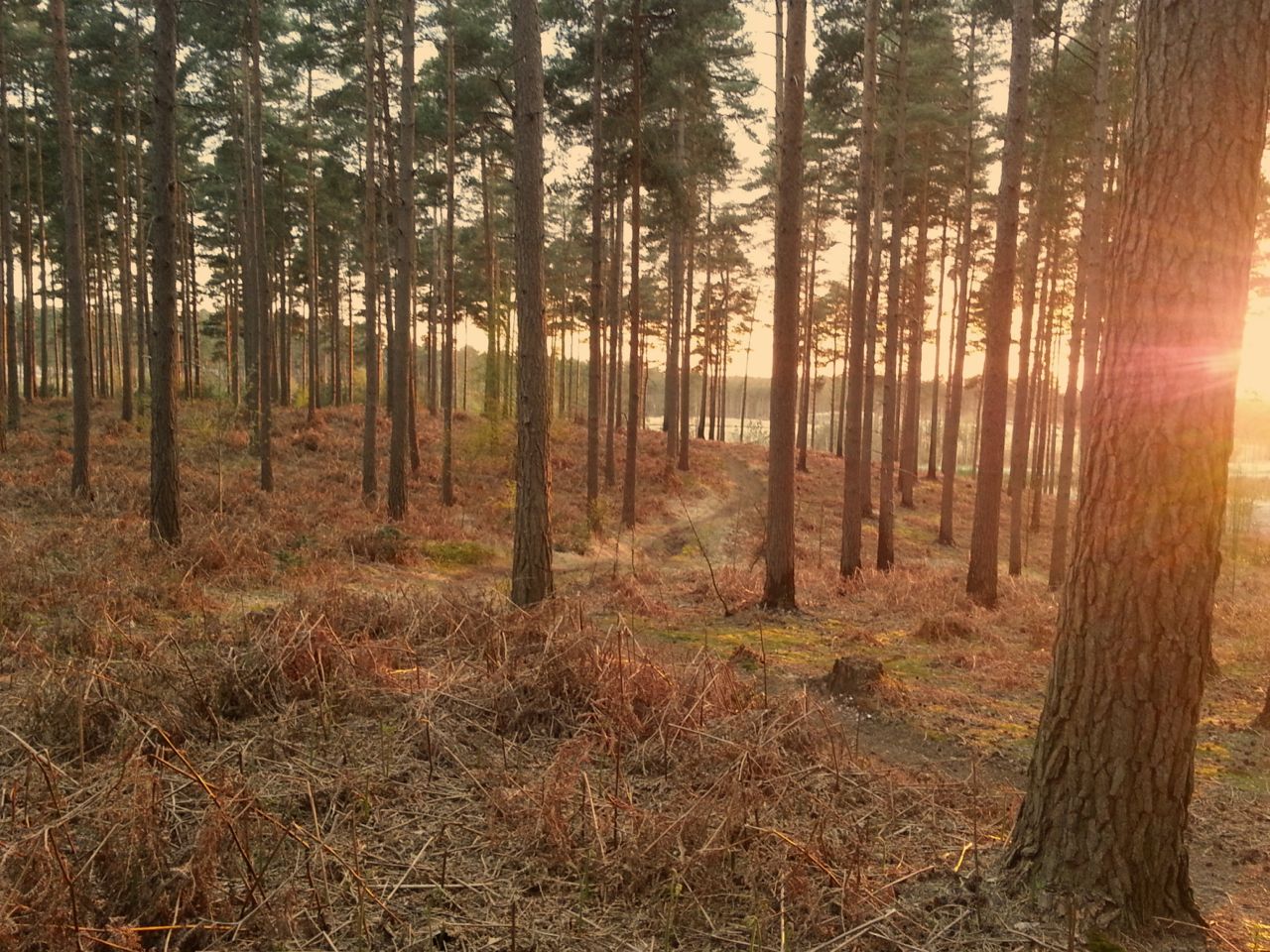
    In Swinley Forest, it smells of pine and dust hangs in the air. Newly developed trails now rollercoaster over the hills. I meet Adam and he goes into the first trail fast. Shockingly fast. I thought he hadn’t been riding much recently. Riding with my hands in the drops and the saddle tucked down from its normal position, it takes some concentration to hold his wheel through the first few hundred metres. When I hit the berms too low, I can hear the brake pads rubbing as lateral forces deform the wheels.


    2013-04-30 20.00.55 - Version 2

    Before long, I’m in front of him, and pedalling everywhere to make sure it stays that way. Where a few weeks ago, I’d been searching around at the back of the cupboard for some power, it was now at my command. Where there had been uphills, there were just brief surges on the pedals and into the next corner. I was picking what he called my “Cross lines”. That one inch wide smooth line between the roots, that dainty hop over the gravel. Pitching into corners for the sake of friendly rivalry and throwing sparks off my pedals as I got my feet wrong and grounded them on the exit of corners.

    No messing – it was an incredible ride. The pure joy of singletrack in the right company – it can’t be beat. That’s why this sport never gets old.

  • The Hard Road

    2013-03-29 15.09.44

    It never gets easier, you just go faster – Greg LeMond

    When you watch a rider who is that little bit faster than you, it seems like magic. Some sort of effortless, inevitable power is driving them on. Meanwhile, every pedal stroke of yours is dredged up from your guts. It’s tempting to think how lucky they are to be so strong. But the truth is that behind every such performance, many miles have been put in. And there are so many strata of riders that this supreme athlete in front of you will know someone who makes them feel the same way you just did.

    Strava is a many faceted beast, but there are two things that it very definitely reveals:

    • The fast riders ride a lot. They get that way because they love riding and they do it often.
    • That singletrack of “yours” that you rule and the race whippet brigade wouldn’t stand a chance on? They just stole your KOM.

    No one gets a fast for free. And if you don’t keep moving, you pretty soon get slow.

    I’m currently digging myself out of that fitness hole. A few weeks ago, most of riding wasn’t fun. The weather was awful and every time I went out, I had hand cramps, a sore back, and empty legs. I’m turning a corner now (and the weather is turning with me so far). I can start to enjoy it more again.

    One of the main motivations of being able to ride fast is the sheer enjoyment of wielding those skills and that fitness that you’ve been honing. Getting into that perfect flow: where you barely touch the trail, you supply a surge of power when you need to, you let it run without brakes.

    It’s a hard road back to that state. A road paved with rides so hard that you want to crash just to have a lie down. A road where you ought not to measure absolutes, but only to concentrate on improvements and enjoyments. Sometimes it has to be lonely on this road, but I’ve been lucky enough to have plenty of company this Easter weekend. So the only trial has been feeding myself enough each evening. The trails and laughs have taken care of themselves.

    Ready or not, I start The Highland Trail on May 25. I start canoeing the Great Glen on May 28. And I guide a 200 mile-in-a-day road ride on June 1.

    It’s time to start earning those trips…

  • Ready for Grenzsteintrophy

    All the usual chaos getting ready (full day’s work, fixing my car tyre, rescuing the cat from a fight, …) but the bike’s in the box and I’m ready to go over to Germany for the Grenzsteintrophy.

    The event is 750 miles down the old border between East and West Germany. It’s a revised route for 2012, so something of an unknown. Now that all the inconvenient planning/packing business it out of the way, the good bit can start: riding!

    I’ll be riding with Andy Waterman of Privateer Magazine, so we’ll be taking plenty of photos and writing an article afterwards.

    You can follow the race here:

    http://www.gps-live-tracking.com/

    (but that looks like another event as of 14 June)

    And my individual SPOT tracker here:

    http://share.findmespot.com/shared/faces/viewspots.jsp?glId=0Wymo8JmF4SoemX99HULZpF3WpgEYP3nt

  • Bristol Bikefest 2012

    [singlepic id=181 w=320 h=240 float=]

    It’s hard to write interesting things about this kind of racing, so here’s the summary of my race in the 12hr solo at Bristol Bikefest:

    Great atmosphere. The race was fun. Then it was boring. Then it was painful. Then it was fun again. Then it was painful with fun bits. Then it was over.

    The support made it all the better so thanks to Singular (as always), Dan + Jo Treby for doing my bottles, Dave Buchanan for encouragement/heckling, and everyone else who said hi on the way round.

    In the end I was 1st solo singlespeed, 5th overall in solo. Quite pleased with that!

    [singlepic id=186 w=320 h=240 float=]

    More photos here

  • Taking Over The Internet!

    While it was enjoyable to write about doing stuff instead of buying/owning stuff, looking at kit is a good way to slack off from work…

    Two things to look at at magazine sites:

    Get some tea and biscuits, then click away!

    PS, at some stage I will post up here the list of clothing + camping kit for Cairngorms Loop.

  • The Cairngorms Loop

    They say you should never meet your heroes. Well, the Cairngorms have always held a heroic place in my mind. I’d never been there, barely even seen many photographs. I just had the impression that it was wild. It was a place where the foolish could come unstuck and the hardy could find beauty and solitude.

    The Cairngorms Loop is an event born out of the same sorts of inspirations as EWE. A desire to put a British spin on ultra-distance racing. A desire to keep it lo-fi. And, frankly, an excuse for some of us to get together in the same place and have some fun. Steve Wilkinson organised in as minimal a way as possible with little more than a great route and a start time. I have a lot to thank him for there.

    The night before the race, I bivied up in the woods near the start. Whenever possible, I’m too cheap for hotels – I prefer a bed of moss to a noisy dormitory or an expensive bed any day. Plus it kept me away from the other riders for a little while. I was unsure of what the event would hold. I planned to try to finish without sleeping but it had taken Steve 56 hours (including 2x 12 hour overnight stops) so that seemed like an aggressive goal. The weather potential was troubling. Strong winds, temperatures around 0C, and getting wet are a lethal cocktail. Like many others, I’d take a good honest -20C for preference. At least you know where you are. So, I didn’t want to mess with my head by hearing other people’s worries. I just took a nip of whiskey and some podcasts to a secluded spot for the night.

    The pre-ride hour was a funny one. Steve was fitting a new rear mech to his still-muddy bike. I was packing gear into new bags for the first time ever. People who knew each other indirectly were making swift and sure acquaintance. It felt like a gathering of what I cared about in riding. Independence. Fortitude. And not taking yourself too seriously.

    I was happy with my bike and I had prioritised my clothing. I took big ice climbing mittens in addition to cycling gloves: losing dexterity in your fingers is step one on a spiral to getting yourself into real trouble. I took moderately thick wool hiking socks and neoprene overshoes. I took a fleece that I have only ever worn while cycling in Alaska – and then only in the strongest winds or the coldest temperatures. I took a proper hard shell Goretex jacket: my experience of soft shells when your energy output is reduced by having to fix/push a bike has been cold and unpleasant. I felt confident that I had enough to keep going in most conditions. And I would survive (but probably not enjoy) a night in my light weight bivi down to the forecast low of -6C.

    Steve shouted, “Go!”, and we went. I chatted to a few people as the first few miles slipped by, but soon I found myself braking downhill on tarmac to stay out of the people in front. I did not like this. I knew that my resources (energy, wakefulness, food) were limited, and I knew that the good weather we had at that moment can soon close in, so I went. I rode away from the group like an antisocial git. But you’ve got to make miles while the going is good.

    When the off-road started, it was still gentle. Zipping along a meandering boulder-strewn river, I was enjoying the moment. Putting some credit in the bank before the pushing began. When the GPS track first lead me through a river, I didn’t hesitate to get my feet wet. Soon enough, I had to get them wet again as I had been too keen to break the spell of dry feet and gone the wrong way.

    Back on track, the trail started to lay out it’s intent. A vein of singletrack cut up and down the contour of a steep hill. Again and again my tyres twanged on rocks as I mishandled my lines. I was going to have to get my head for riding rocks back – this was not like riding in the South East. The engagement of riding was pure, though: no thought other than keeping up some poise and momentum, then satisfaction as I emerged onto easier trails once more.

    The miles went by unbelievably quickly. I was lucky enough to have hooked up with Steve Heading after my little wrong turn and we passed time easily. It was a real pleasure to ride with him, but I did feel as if we were drawing each other towards an overly ambitious pace. It served a purpose, though, as I started to make guesses about when we might emerge from the inner loop on the route. The inner part was really the meat of the ride: more elevation and more hike-a-bike than anywhere else. If I could get down from there before sunset, I would be happy.

    The inner loop soon kicked into more fun singletrack. I was even throwing little jumps in and playing with the bike. I hadn’t eaten much yet, relying on energy drink in the first fill of my bottles. But, with a little wisdom, I filled up from a river and started taking solid food. I wanted to stay on top of things, not have to come back from the brink of bonk.

    Later, the pushing really started. Heading up An Lurg was beyond the effort I was prepared to put in under these circumstances: climb hard for 10 meters, hop a rain channel climb hard again, repeat until you’ve gained over 400 metres of elevation. Or just walk up the damned thing.

    It was about here that the snow started. Really just for atmosphere and blown in on a gentle tailwind. When the trail finally did turn downwards again, I was in a “moment”. Again, it took full concentration to deal with the rocks. Now there was nothing between them, just more rocks. My friend speed and I rolled through as fast as we dared. As I saw Steve H a little ahead, I appreciated everything that had brought me here. Years of riding had given me the skills to find some flow on this rocky concoction even with rigid forks. Months of training had given me the strength to get up here. The luck to be born in the right place, and a lifetime of decisions, accidents and chances had put me right here: using all of my skill to ride in the wilderness, comfortable in the snow, and enjoying it.

    Of course the ride involved toil. Jumping over bogs, dragging the bike over bouldery climbs. Emptying pebbles from my shoes. Putting my wheel back in when the QR got undone during a river-crossing. But toiling to a special place made it all the more special.

    In the latter stages of that inner loop, the hail/rain/cold-wet-stuff was blowing in my face. I was glad to be there in daylight and still seemed to be OK for my aim of coming out before dusk. In places, rivers raged and land had slipped towards it. The land was breathing all around me, and I could work with it.

    As it turned out, I was back to Feshiebridge and ready to continue around the outer loop at 9pm. 11 hours had elapsed and I felt like I had broken the back of the hardest section. It was time for caffeine pills. On the Divide, I had been schooled by Kurt Refsnider and Jefe Branham. They had shown a whole new level of commitment and sleep deprivation. I had toyed with this once before and was about to go without sleep again. 100mg of caffeine for me, new AAs for the GPS, let’s go!

    The light of the far north is something that I always feel privileged to enjoy. Golden light and pure skies watched granite turn to shadow as I pedalled through. As the shadows began to win, I lit up the trail and kept up the speed.

    Singletrack, moorland, gates, forests. The moon kept catching my eye and I kept scanning the hills around looking for bike lights out there. I started to get paranoid that Steve H had overtaken me. At gates I would turn my light at the tyre tracks ahead of me, looking out for the Ikon tread pattern that both of us were using. He had had a puncture earlier (lighter sidewalls than my Ikons), and I couldn’t see how he could have got past, but my mind was playing tricks.

    Eating was getting boring, but I had to keep it up. I had Tomintoul to myself that night – the street lights offered me nothing. Back into the looming shadows of the hills. A fast trail along Glen Bullig was eating up the miles again. I could hear the river and feel the landscape around me. I could only imagine that it would be beautiful by day. It brought back memories of The Master of Ballantrae – deeds by moonlight and people born in this land.

    There was real snow now, heavy flakes that hung long enough to sting my eyes as I rode on through. Easy trails became climbing, which became pushing, and the temperature dropped. My hands lost feeling and the brakes were almost too painful to pull on the way down to Invercauld Bridge. Too late, but not way too late, I switched to my mitts and ate some food. My water was painfully cold to drink. After that short break the cold had really set in and I shivered uncontrollably down the last bit of road descending. It didn’t seem cold enough for a fleece, so I just zipped my jacket up to the neck and pedalled hard to get some heat going again.

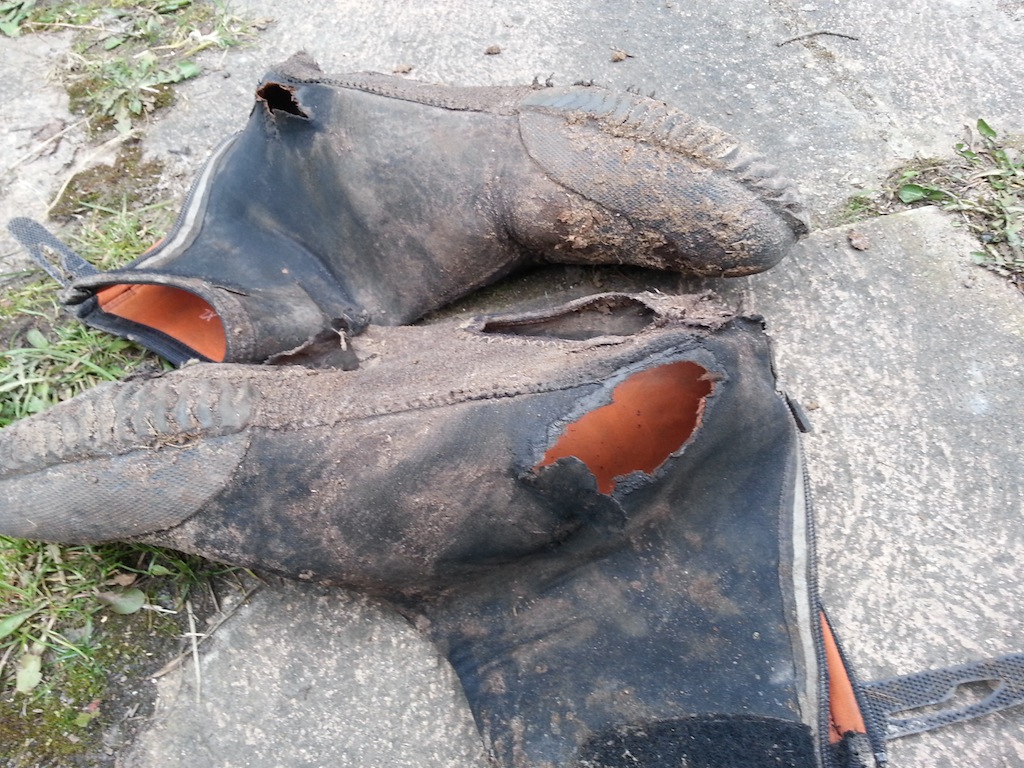
    The temperature continued to drop. Ice formed on the outside of my neoprene overshoes and I worried a little for my feet. They were very cold, but not (I thought) in danger of frostbite. My only option to warm them up would have been plastic bags – I was wearing the rest of my footwear. I just hoped not to have to make too many river crossings before daylight brought more warmth. My hands and the rest of my body were toasty now, but my water bottles were frozen solid and my chocolate was brittle.

    The inner and outer loops ran together for a short while at the Linn of Dee. I gnawed at my frozen food and walked for a while to warm up my feet. This felt like the homeward leg, and I had come through enough of the night to start speculating about when I would see the sun again. My feet ached for its warmth.

    There were more rivers to walk through, now they stuck mud and ice to my bike. A clinking noise tuned out to be a frozen bit of torn overshoe knocking against the chainstay. All I was doing was keeping forward progress and waiting for dawn. Bog-trotting came back, but much of it was frozen so somewhat rideable. And eventually, light came back to the Cairngorms.

    My spirits had yet to lift, though. There was no warmth, just illumination. And I was now riding singletrack along Allt Garbh Buidhe. The trail ran along a steep slope, and was punctuated with tricky rock sections. My useless brain couldn’t handle this. I peg-legged along keeping the bike tilted away from a fall down to the river. It took forever and irritated me, only to be followed by a brutal push up and over to Fealar Lodge. I took comfort in the hope that those who had decided to send the route this way would soon be regretting it as well.

    I hit a rough road out of there and the sun was finally warming me up. Suddenly, I could climb again and every inch I didn’t walk took me closer to finishing soon.

    Things moved fast now. Although I kept mistaking sheep for people, the end was near. By the time I hit tarmac near Blair Athol, I felt ready for another loop (I wasn’t).

    Down at the train station, I took a photo of my bike by the clock. I attempted a self-portrait with the timer but was obviously too confused to operate a camera properly, there was no photo taken. I peeled off my jacket in the sun, and called Emily. Cairngorms Loop was done in 22 hours 30 minutes. I thought I had probably won, but still couldn’t tell. Satisfied, I rode back to my car and ate some olives.
  • RouteBuddy

    As I’ve been working away on the route for EWE, the software that has made it possible has been RouteBuddy. I’ve always resisted buying any mapping software as you can get quite far with free online tools and there is limited choice for Mac users. But EWE was too big a project: I needed to split and join routes; I needed to be able to zoom out for an overview with OS data; I needed some way to organise the route fragments.

    Route Buddy has given me all of this (if you’re on Windows, it’s available for you, too, with all the same features).

    My method of route planning for unfamiliar areas where I’m having to do it all myself has been as follows: Download routes for the area from the internet. Plot fragments of nice looking trails from guide books that I have. View all of these tracks together in Route Buddy and formulate a plan…

    [singlepic id=176 w=640 float=]

    For anywhere that looks potentially difficult, I flick it over to the satellite view and look for tracks on the ground.

    [singlepic id=178 w=640 float=]

    With all this and the OS mapping showing national trails, I attempt to put together something that’s fun in the fun bits and just gets the miles done in-between.

    [singlepic id=179 w=640 float=]

    Drawing routes onto the map has been really simple. I just hope that my clicks are accurate enough. We’ll find out when I get the chance to test-ride parts of the route or when the competitors get lost!

    Organising things into “Locations” has been really handy for working on one section at a time and then bringing them into the main EWE route.

    Finally having a decent tool for route-planning, I’ve been using it for planning some normal riding (even in my local area). I’ve joined together traces from rides that I’ve done already, and linked them in the same sort of way as EWE to be able to make longer loops and see how challenging they will be. I’m not sure how I lived without this!

    [singlepic id=177 w=640 float=]

    For full information on RouteBuddy, go to their website: http://www.routebuddy.com/routebuddy

  • How to fix a Garmin Dakota bike mount

    Overall, I’ve been really happy with my Dakota. It’s seen me through many (many!) miles of riding and not once let me down.

    A couple of times, it did eject on rough ground but I was lucky enough to find it quite quickly on each occasion. Given that a GPS is pretty important to various long rides, I took to using the lanyard around the handlebars as extra security.

    A couple of weeks ago, though, it started jumping out of the mount on the slightest of bumps. I supposed that the plastic of the mount had worn down and made it a loose fit.

    So I went to level 2 bodging materials (level 1 bodging being cable ties and duct tape): superglue!

    The idea was not to glue the Dakota in, but just to build up some extra material on the mount. With thicker rails, it should hold the GPS more securely. Also, Araldite is kind of tacky even after it has dried so that should help too.

    [singlepic id=171 w=320 float=]

    Untreated bike mount

    [singlepic id=172 w=320 float=]

    Treated bike mount

    As you can see, I’ve just put a strip of glue along the rails. I let it dry overnight, then tested with some very rough trails. One trail was horse-hoof pocked and often causes bottles to fly out of cages: not a peep from the Dakota. Success! And cheap, too.