Category: running

  • Stoicism: The impediment to action advances action

    Stoicism: The impediment to action advances action

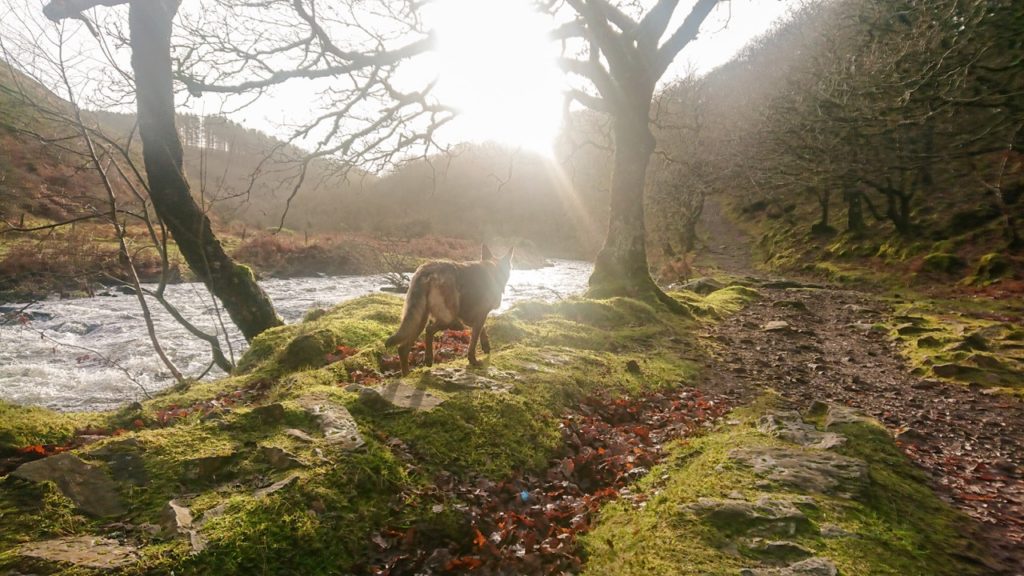
    Running the Doon Valley on Exmoor in January 2020 – a feast for the senses

    It’s been a long time since I’ve written on this blog. It is 11 years since I first raced the Iditarod 350 in Alaska, 10 years since I first raced The Tour Divide, and 9 years since I first raced the full Iditarod to Nome.

    Life caught up. The biggest asset for someone committing themself to racing long distances is a lack of other commitments. That couldn’t (and didn’t) last for ever: Getting married, buying a house, raising a child, living with a menagerie of animals. I wouldn’t trade a thing, but it puts me in an interesting position now.

    The hunger for adventure and challenge still burns inside, but the opportunity has been severely attenuated. This has lead me to Stoic philosophy. Stoicism takes the virtues that I found independently out on the trail, and works them into a coherent whole.

    In Alaska, Bill Merchant reported to me Mike Curiak’s reasons for racing the 1000 miles of frozen trail from Knik to Nome:

    We go out there to look for cracks in ourselves. We keep coming back to see if we have fixed any of them.

    That made a lots of sense to me back then. Now, reading Stoic philosophy, I find the same idea:

    Neither a bull nor a noble-spirited man comes to be what he is all at once; he must undertake hard winter training, and prepare himself, and not propel himself rashly into what is not appropriate to him

    Epictetus

    I found myself out there with strong intuitions about what was right, and how to behave. In Stoicism, I found that I had actually been reinventing (or rediscovering) old truths.

    Even without that extremity of adventure in my life today, the lessons of Stoicism are valuable. I sometimes find myself bemoaning my misfortune at not being able to take up another big challenge (yet). This is incorrect in so many ways (I have a lot to be thankful for) but Stoicism also has a message about difficulties:

    Our actions may be impeded… but there can be no impeding our intentions or dispositions. Because we can accommodate and adapt. The mind adapts and converts to its own purposes the obstacle to our acting… The impediment to action advances action. What stands in the way becomes the way.

    Marcus Aurelius

    At first sight, this sounds trite. Like the aphorism that every cloud has a silver lining. But it is more than that. It is closer to: When life gives you lemons, make lemonade. With the additional reminder that events are objective. They are not good are bad. It is our perception of events that causes us to consider them good or bad. And the grit of a hard situation may turn out to be exactly what we need to grow.

    My current sport is running. Before my son was born, I would do a 15-20 mile trail run on most weekends. Now, I sometimes struggle on a 5 mile run. Which sounds bad. But I have a choice in how I perceive the situation. Making the right choice has turned it into something valuable. There is virtue to be practised here.

    When I was running more miles, I aspired to run an ultramarathon. The only problem was that I couldn’t slow down to a sustainable pace. People talked about developing a plodding pace for ultras, but I couldn’t do it. I’d run relatively fast, then I would either finish or blow up at around 20-25 miles. If the race was longer, I was doomed.

    Now that I have less time to run, 10-15 miles is suddenly a significant challenge. If I have time to fit in such a long run, then that run is beyond my ability for my standard pace. So, I have been able to take this awkward position of being less fit than ever, and turn it into an opportunity to practice humility and pacing. And this is the way I’ve found my plod. It is the only way I can run 15 miles these days.

    I have no idea when I may be able to turn that plod into something I exercise at an ultra, but I’ve found it. And with the plod came the feeling that I recognised from the bike. When I could be out on a wet winter day for 12 hours, and still feel comfortable, then I knew that I was ready for a big bike race. It didn’t really matter how many miles I covered in those hours, as long as I felt calm. Until I found my running plod, I’d never had that same feeling on foot.

    The impediment to action advanced action. The obstacle turned out to be the way. Now I have more mental tools for running, and they came about in a way that I never would have expected.

  • Running With Anuk

    A post shared by Aidan Harding (@aidan.harding) on

    If you want to see unconfined joy in movement, you need look no further than running with a dog. When I run with my dog, Anuk, he doesn’t know how far we’re going; he doesn’t know where his next chance to drink will come from; he just looks up with big brown, trusting eyes and follows my lead. It is uncomplicated.

    It can take me 30 minutes of running to fully leave behind my day-to-day thoughts. For Anuk, the jangle of the wrist-strap on my GPS watch is enough to get his mind on the trails before we have even stepped outside. Knowing the joy it will bring him has often been enough to get me out the door when tiredness or laziness could have won the day.

    A post shared by Aidan Harding (@aidan.harding) on

    On a run without Anuk, a gentle downhill through a meadow might be a chance to rest and ease off the pace. With Anuk, he waits for me to close the gate, and then he is off. Earlier, he might have been trotting with his tail up, now it’s long strides and his tail flowing behind him. I can’t resist the call, and quicken my pace to match him. We fly down the hill, his tongue flapping and my arms waving to balance my two legs. I might think I’m doing OK keeping up with him, unless he sees a rabbit. If that happens, I soon find out how much speed he was holding back.

    A post shared by Aidan Harding (@aidan.harding) on

    On the singletrack coastal trails of the South West Coast Path, I have to be careful. Rough ground and narrow trails along the cliffs mean that I have to watch my feet. And that can lead to me running right past the outstanding views. Except that when Anuk is in front, and he sees a good view, or he smells a good smell, he just stops. I often pile into the back of him. While I’m briefly annoyed, I’m soon glad to be reminded of where we are and how to appreciate it.

    A post shared by Aidan Harding (@aidan.harding) on

    We are very much in it together on the long runs. One long Exmoor run in the summer started out by following The Barle. I knew it was hot, so I’d planned to stay close to rivers, allowing Anuk opportunities to cool off. The first section was all fine, bounding over the rocks and shady trails. We cooled our heels at Tarr Steps, then crossed over to The Exe. Climbing over the moor was incredibly hot, but we were rewarded with another river and more shade. Then, things started to get difficult. My planned route back over the moor to our start point at Withypool made use of some less well defined tracks. Tracks that turned out not to be there, and resulted in us slogging up stepped fields in the hot sun. Swatting horse flies, and sharing the last of my water with Anuk, I had to get the map out and find us a guaranteed way back home. Doubt was nipping at me as much as the flies, but eventually we reached the lane I was looking for and had our guarantee. We trotted at Anuk’s pace – so gentle now that I wasn’t even sweating in the heat (if you’ve ever run with me, you’ll barely believe such a pace exists) – gradually eating up a mile of tarmac.

    A post shared by Aidan Harding (@aidan.harding) on

    The watch said it wasn’t, but if felt like a long time down into Withypool. I could feel the effects of dehydration on myself, and I could read Anuk’s ears to see that he would be very glad to see the river again. Once we were down there, though, and bathing together in front of bemused tourists, the world changed colour. We were cool, refreshed, and Anuk seemed ready for another lap. I was not.

    A post shared by Aidan Harding (@aidan.harding) on

    There really is no feeling like running through the woods, with the smell of loam in your nostrils and a large dog running by your side. At its best, running can feel bring on an incredible connection to the land you’re moving through. With my canine companion, it is all the more intense.

    I just wish I didn’t have to carry out his poo.

    A post shared by Aidan Harding (@aidan.harding) on

  • The puzzles of pain-free running

    Fantastic morning light for trail running in the local woods #runwithstrava #Devon

    A photo posted by Aidan Harding (@aidan.harding) on

    Really, how much technique can there be to running? The clues are there: top marathon runners do a whole marathon faster than I can run downhill for a mile. Top ultramarathoners run further in a race than I do in a week and their bodies cope with it.

    Running leaves many bodies in its wake… People who get so injured that they turn to other sports. People who flip-flop between running hard and having injury lay-offs. I’ve been trying to avoid becoming one of those bodies that gets sucked into the wave of running, only to be left bobbing up and down – knees crepitating in the swell; turgid tendons swollen and useless. I’ve been trying to figure out how to ride that running wave unharmed.

    It’s been a struggle and a puzzle and a learning experience.

    At first there was the outright effort. Burning lungs and whole-body aches. No frewheeling, no easy miles. A great rush of exercise endorphins afterwards, but little to enjoy during the run.

    Romping in the buttercups

    A photo posted by Aidan Harding (@aidan.harding) on

    And then came Anuk, my Husky x German Shepherd running buddy. Suddenly, his joy for running became my joy for running. He is a rescue dog and had obviously not run much in his previous life. My concern for his joints made me more conservative in building up the mileage than I had ever been when it was just my own wellbeing in the balance. As we ran, the immediate suffering of running passed.

    Emily and Anuk running on the coast path #stravaphoto #Exmoor

    A photo posted by Aidan Harding (@aidan.harding) on

    I could enjoy a run, we could roam around the Coast Path and the moor. But pain was lurking. Shin splints were something I had encountered before, and never got past. So, I turned to the internet. Joe Uhan on iRunFar had an excellent article on basic running form that started to sort me out with two basic concepts:

    1. Lean forward
    2. Flex and extend the extremities

    By leaning forward and shortening my strides, I was putting less strain on my legs and the shin splints went away. By keeping a lid on the distance I was allowing my joints and bones time to develop. By coincidence, I had been watching a documentary on BBC4 that showed how you could identify longbowmen from their bones because one arm would have denser, bigger bones to accommodate the muscle and bear the load of firing a great big longbow. I had moved from non-weight-bearing exercise on a bike, to the weight-bearing exercise of running. In a minor way, I could expect some adaptations in my own bones: as long as I gave them time.

    For a while, then, there was no pain. I had solved running.

    There was the minor puzzle of toe blisters on longer runs – simply solved by tugging the ends of my socks to give some wiggle room before putting on my shoes. There was the minor irritation of my heels getting pulled out of my shoes in mud – solved by lacing them the fancy way.

    Then the achilles tendon pain came in. My achilles was getting swollen, less mobile, and quite painful in the mornings. It would loosen during a run, but I didn’t seem to be on a sustainable trajectory. I looked to Joe Uhan again. Which has turned my exaggerated forefoot landings into more of a wholefoot landing. Again, coincidence threw more evidence my way with this report on Kilian Jornet’s footstrikes (if you don’t know who he is, prepare to go down a rabbit hole of insane videos. You could start here). In retrospect, it seems obvious: variation is good. And different footstrikes are suitable for different situations. So I tried to be more varied and more adaptable. I tried to further increase my cadence and decrease my stride length. The pain got better, and I could run faster down hills.

    When your feet can't get any more wet & muddy, you might as well stand in a river and make them just wet

    A photo posted by Aidan Harding (@aidan.harding) on

    I don’t want to make a beautifully simple sport complicated, but I don’t want to blunder into doing myself harm. One thing I have learned about endurance sports is to listen to your body. Sometimes, the correct response is “Shut up legs!“. Sometimes, the correct response is to stop; figure out how to make it stop hurting; then go again, but with better technique. It makes a nice challenge that I had never even considered as part of running. Add that to the simple joys of bounding across the hills with a dog at your side, and there’s a lot of fun to be had in learning the ways of two feet.

    Another one for the folder marked "Sunsets with Anuk"

    A photo posted by Aidan Harding (@aidan.harding) on

  • “What’s the matter? Your bike broken?” – Running Onwards

    I never thought that I would enjoy running as much as I do. I never really thought that I see my love of riding wane. But both of those things seem to have happened.

    Right now, I don’t have a “Next Challenge”. The Iditarod Trail Invitational in February (story to appear in the next Sidetracked Magazine) and the Yukon 1000 in July were fantastic, but costly. Having recently moving house (and had the standard shafting from the bank), I’m pretty cleaned out financially. So there is no next adventure (yet).

    It was always “easy” to train for bike adventures because I loved riding. Sometimes it was difficult to get out of the door and onto the bike. Sometimes it sucked to put on my wet shoes, or hose down my clothes in the dark and the rain. But I always knew that, not long into the ride, the outright fun of riding bikes would make it all better. Now, though, the faff and the expense seem to outweigh the outright fun.

    It’s not time to sell all the bikes and sack it all off, but it is time to do what seems like the most fun. Pursue the kind of drives that made mountain biking so much fun in the first place: getting outdoors, pushing yourself, having those shared secret moments of boundless enjoyment in your own little world.

    So paddling (canoe and sea kayak, mainly), climbing, and running seem pretty legit. All activities that I have been unable to commit to in the past, due to riding. Now’s the time to see what they can offer when I give them the time and effort to reap their rewards.

    Which is why I ended up setting out on Trentishoe Down this morning to run a section of the Southwest Coast Path. Regular running with the dog had got me the fitness, now it was time to go on a more adventurous trip. (Note: Anuk is awesome, see here. But he has a cut on his paw, so he’s off running for a few days)

    SW Coast Path, near Trentishoe Down

    A photo posted by Aidan Harding (@aidan.harding) on

    In the car, moments before setting out, I felt the nervousness and uncertainty that had accompanied early mountain bike rides. Could I really make this run? What if things went wrong? It seems cold out. One use for my experience of other adventures is that I know which of these thoughts to listen to: at that moment, none of them needed to be listened to.

    The wind was blowing hard, chilling me before I had had chance to warm up. The rolling green hills of the approach to the coastal path were lost on me. I was keen to be moving, and be warm. I wanted to start ticking off distance so that this would feel more real. Almost immediately, I was sliding around in the mud. Aforementioned financial reasons (and knowing nearby bits of the path to be gravelly rather than muddy) meant that I was running in my regular road shoes. I trotted. If I were riding a bike the way I was running, I’d be that guy with both brakes on hard. Limbs all tense. Probably dragging a skid the whole way down the descent. As the trail flattened and did turn more to gravel, I could appreciate the cliffs laid out ahead of me. It was a special place and it was mine. This was simple, it was flow and smell and sound and being. The morning sun was still too low to reach much of the path, but when I turned up Heddon’s Mouth Cleave, it lit the mist and bracken with gold.

    SW Coast Path, Heddon’s Mouth Cleave A photo posted by Aidan Harding (@aidan.harding) on

    Coming down steep steps and across some scree, I thought back to the runner I had seen on Ben Nevis years back. I did not resemble them, but maybe one day I could. The low-down woods and the babble of the river were a different, quieter world. They were warm and inviting. Some easy going on the flat to stretch out my stride again.

    Climbing out was remarkably like climbing on a singlespeed. No way to make it easier, just tap it out like the top is 100 miles away. Hard, but sustained effort. Sun tipping onto a few outcrops and Wales sitting in the far distance.

    This was cool. This would actually be fun to ride. But on a bike, the drop to Woody Bay would be over in a flash. On foot, I try to read a mosaic of leaf, rock and root. It was fine, fleet, going.

    Coming out at the water’s edge, I felt good. But I had just been going downhill for nearly a mile.

    SW Coast Path, Woody Bay

    A photo posted by Aidan Harding (@aidan.harding) on

    Reassured that I was going to finish my planned route, I headed back up the hill. More light was coming over the cliffs now, and I could feel the presence of the climb back up Heddon’s Mouth Cleave looming ahead of me. Strava has it a > 40% gradient and that doesn’t seem too far wrong.

    SW Coast Path, out of the valley and into the light

    A photo posted by Aidan Harding (@aidan.harding) on

    As the trail kicked up for the final time, I had nothing left to kick back with. I was walking briskly, but still moving. Wondering if my legs would come back to life when the trail gave me a chance. The dilemma of running clothing meant that I would be pretty cold if they didn’t. Of course they did, and the final miles were just a job of closing out.

    I don’t think this run will go down as an epic adventure. But, it was a chance to taste uncertainty. It was another beautiful bit of Devon. And maybe this is where more adventures may lie. Cheap, local, directly connected with the ground.

    http://www.strava.com/activities/214133199

  • How running has helped my biking

    For the longest time, I believed that running was the tool of the devil. It was boring and painful and why would anyone do it when you could instead be mountain biking. After all, mountain biking is the best of all sports.

    In 2006, running did me a lot of physical harm but ended up being a force for good. One sunny bank-holiday afternoon, I was biked-out from riding on Saturday and planning to ride on Monday. So on the Sunday, I went out and ran. Unfortunately, I far exceeded what my knees were ready for: I pounded out 10km with zero training, and did it on rock-hard off-road trails. A knee-surgery later, I had done no biking in months. It was horrible to lose the ability to exercise – I even bought an X-Box during that period. In the end, though, it was a life-win as I got into swimming again, then into open water swimming, and that was how I met Emily.

    I held a grudge against running, though. Which was a little unfair. A bit like going teetotal after drinking a whole crate of beer. In more recent times, I’ve dipped my toe back into running. Building up slowly, and actually enjoying it. The simplicity of just sticking on a pair of trainers and setting off from my front door is a fantastic, accessible activity. Since I’m not very good at it, I’m still on the steep curve of improving performance, which is very satisfying. And this measured approach is actually improving the stability of my knees.

    I forced myself to move from a pounding heel-strike style, to landing more lightly on the ball of my foot. It took some sore calf muscles to get there, but now I can do a better job of absorbing the shock of landing. This has helped with hill-walking, biking and generally having a more balanced body.