Blog

  • Devizes to Westminster Canoe Race

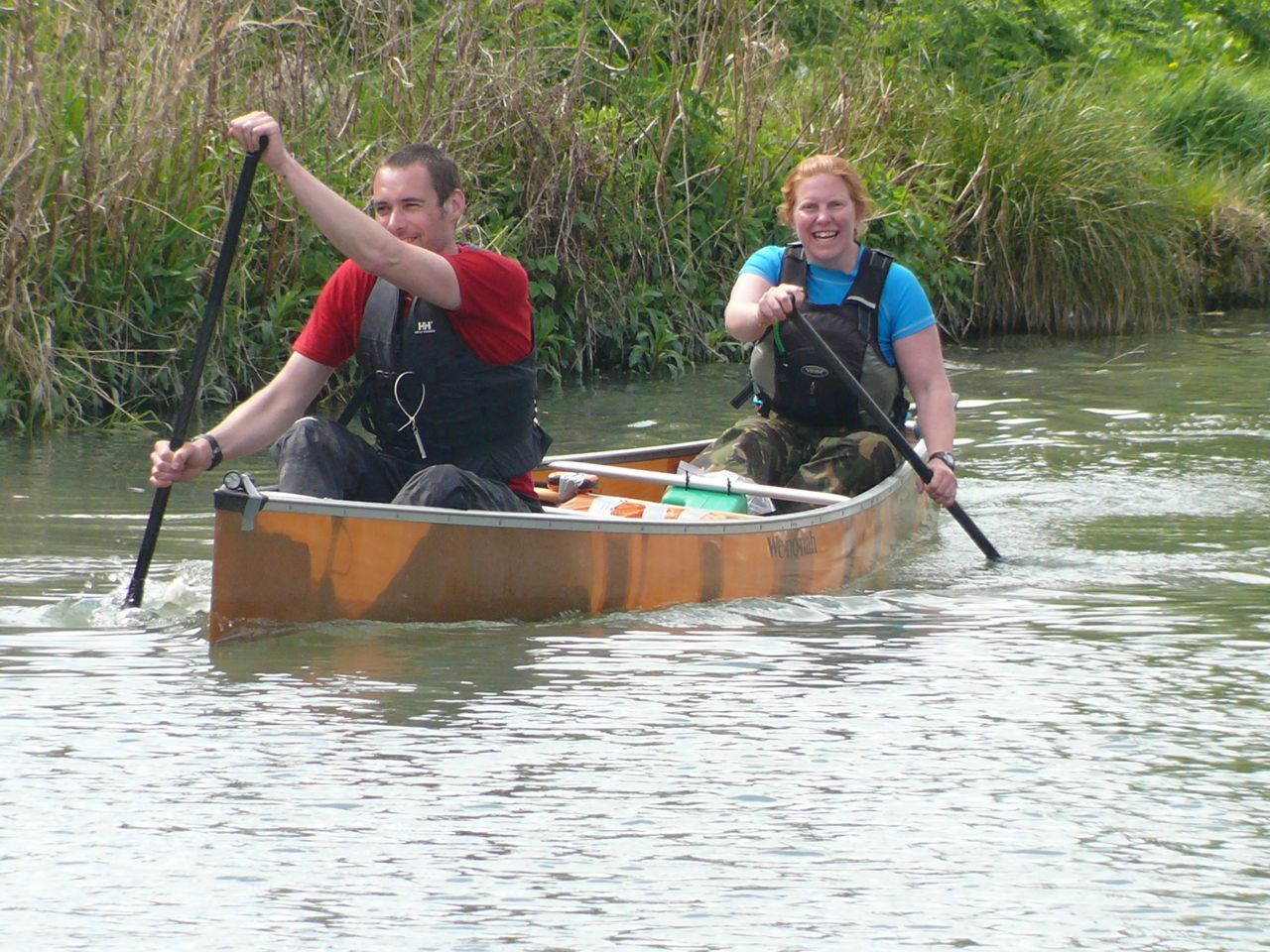
    Over the Easter weekend, Emily and I paddled the Devizes to Westminster Canoe Race. 125 miles, 77 portages, and no sleep. (Strava track here)
    type1

    It was a whole different experience to racing bikes – a lot of it was type 2 fun (don’t know what type 2 fun is?). Just going and going, and endlessly paddling. It took us 30 hours and 42 minutes to finish. We spent almost all of that time paddling, with no sleep at all (aside from the occasional head-bob during the night).

    The Canal

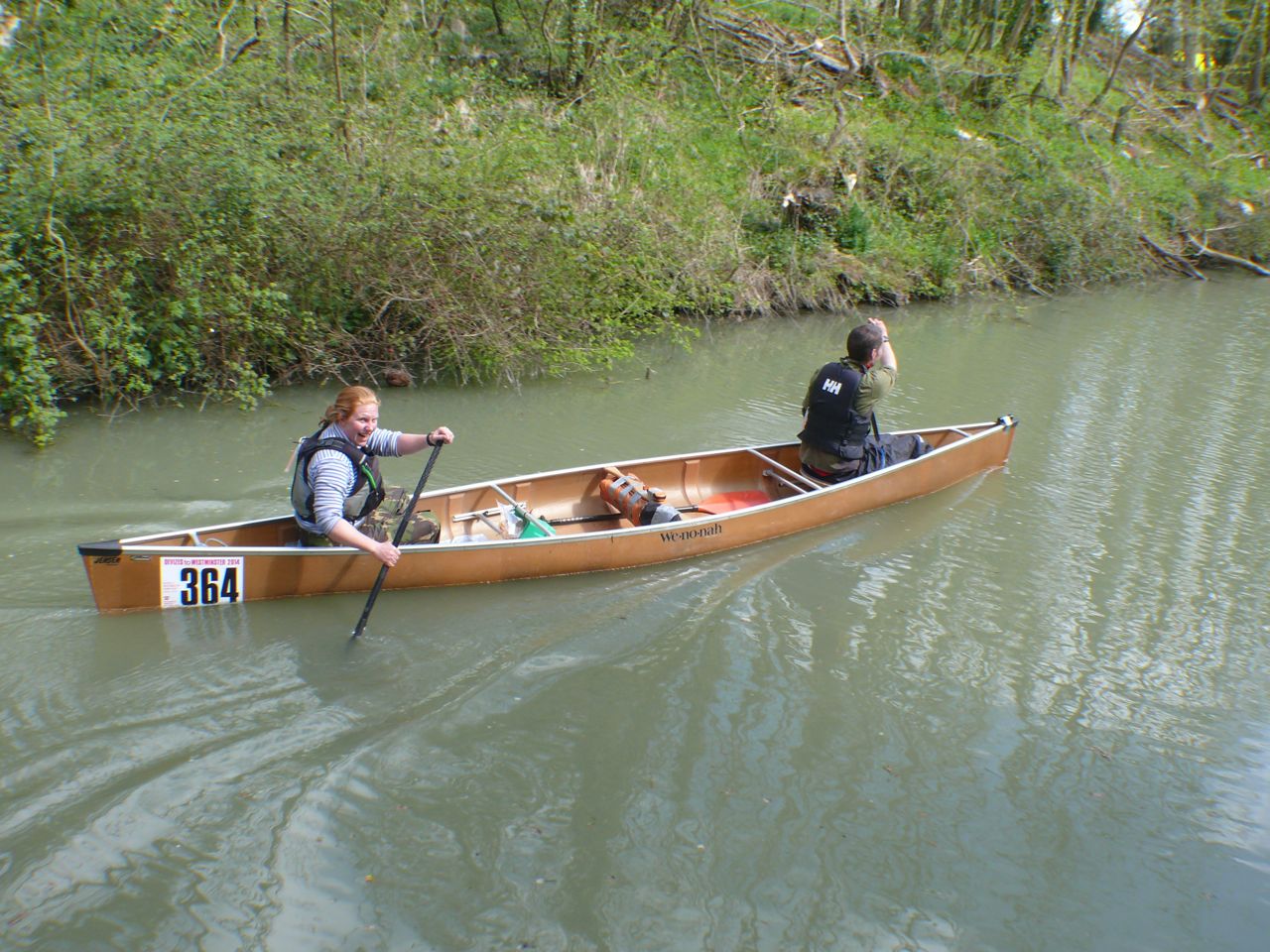
    From the start, there is 16 miles of uninterrupted canal along the Kennet and Avon. It’s a peaceful amble though Wiltshire and we found ourself setting a nice pace. The new Ainsworth carbon paddles and the super-fast canoe that we’d borrowed from Geoff and Babs were making a big difference. Thinking all the way ahead to the first 10-hour cut-off, we were on a pace to get through with no problems.
    blue_water

    You can choose when to start (mostly between 7am and 12pm), and we had gone early. The long-term goal was to reach the tide at Teddington – if we missed that, it would be 12 hours delay to wait for the next one. So, throughout the day, faster crews (who had set off later) came past. Everyone was friendly, and many of them were from the armed forces.
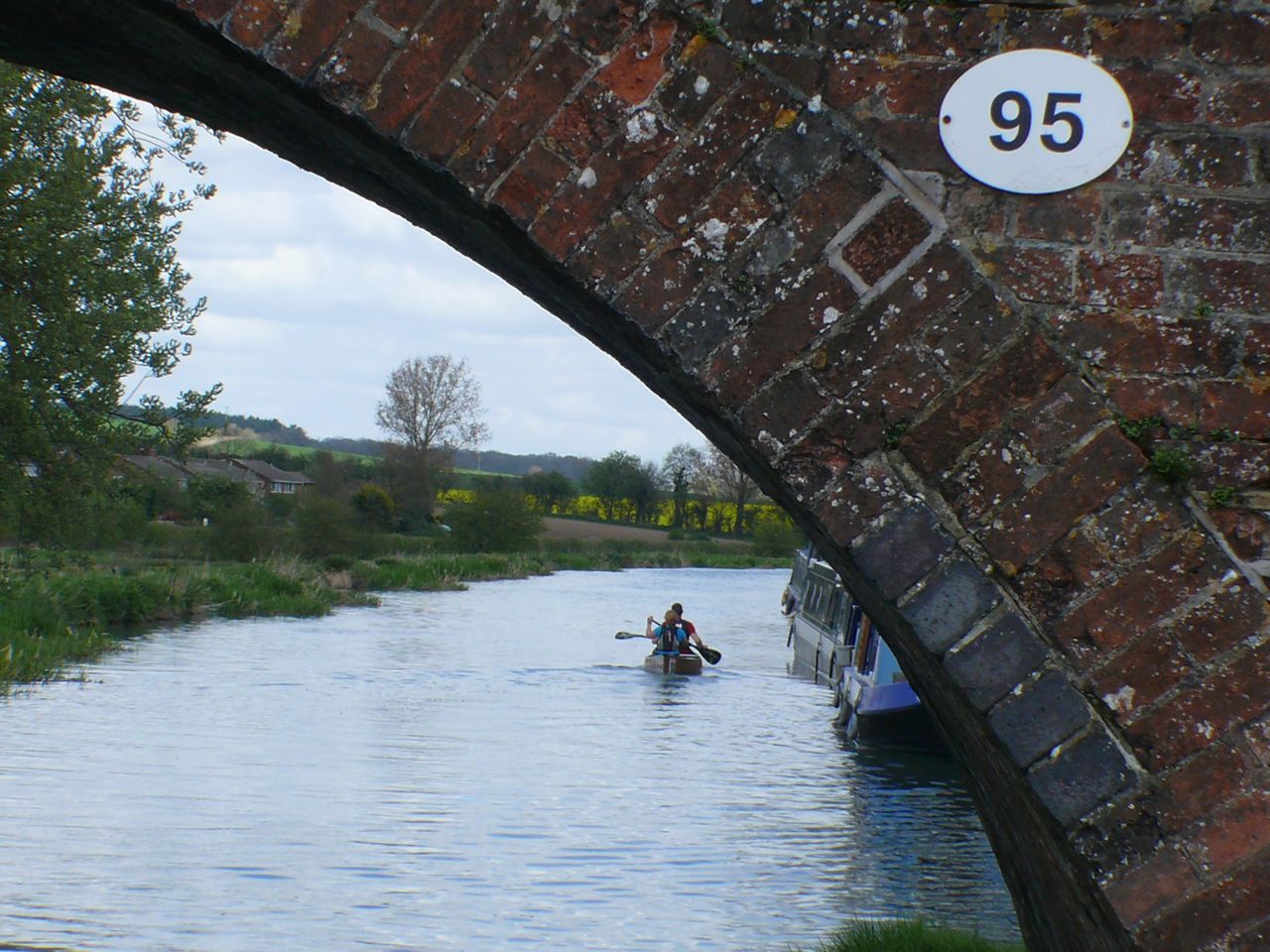
    bridge

    The Portages

    One of the distinctions of the DW is the number of portages. With many locks to travel through, there is no time to go through like a canal boat. You hop out and carry the boat along until you can resume paddling. Our nearest canal (The Great Western, near Tiverton) has no portages, so we had practised by just getting out every time the canal went under a bridge. This paid off in the race, as we were pretty slick. Our good routine, and the open boat meant that we gained ground on kayakers during sections with a lot of portages.
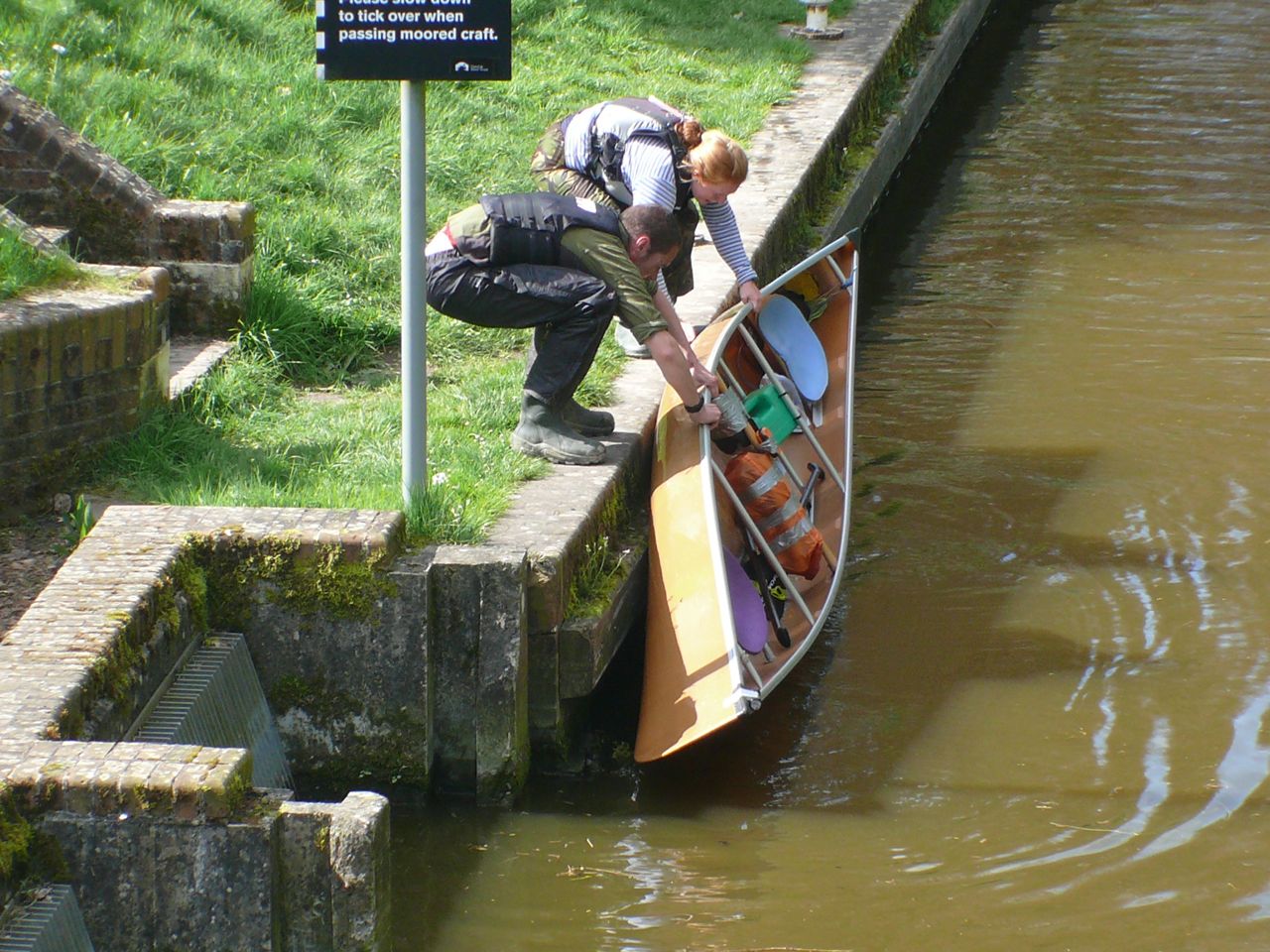
    portaging

    Portaging is also your best chance to eat. It is one of the things that is very different from biking: in the boat your hands are always occupied with the paddle; on a bike, it only takes a short stretch of easy trail to stuff some food in your mouth. So, once the canoe was out of the water, we would often grab a bite of food and chew as we walked. Emily and I both went for a bag of sweet (chocolates, candy, etc) and a bag of savory (oat cakes, pastries, nuts), so that we could mix things up.
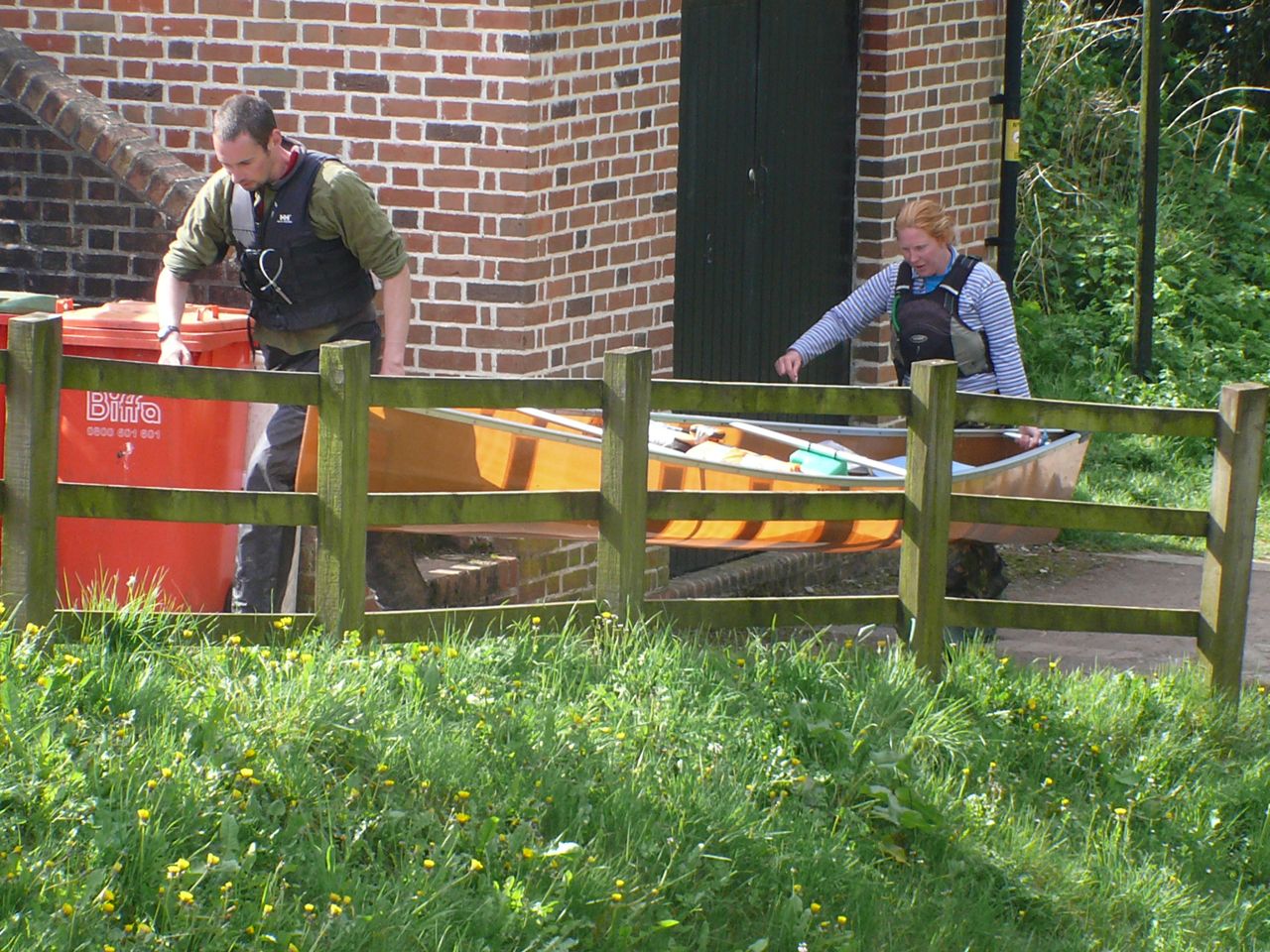
    portaging_2

    The Night

    This was to be the first time that Emily had done an event through the night. It ought to have been something that I would be good at. After all, I’ve ridden through the night on numerous occasions. But it didn’t work out that way at all…

    Through Newbury and onto Reading, we enjoyed a red-skied sunset. In one horrendous portage, the entry was from a mud flat underneath a bridge. Emily had got into the boat first, so that I could push her clear in my taller wellies. As I stepped forward, though, the bank ended and I was suddenly up to my thigh in the river. With no solid edge, the only solution was an ungainly crawl back onto the mud. Fortunately, I managed this quickly enough that the river water had barely made it through my waterproof trousers and boots, despite being way above the boots.
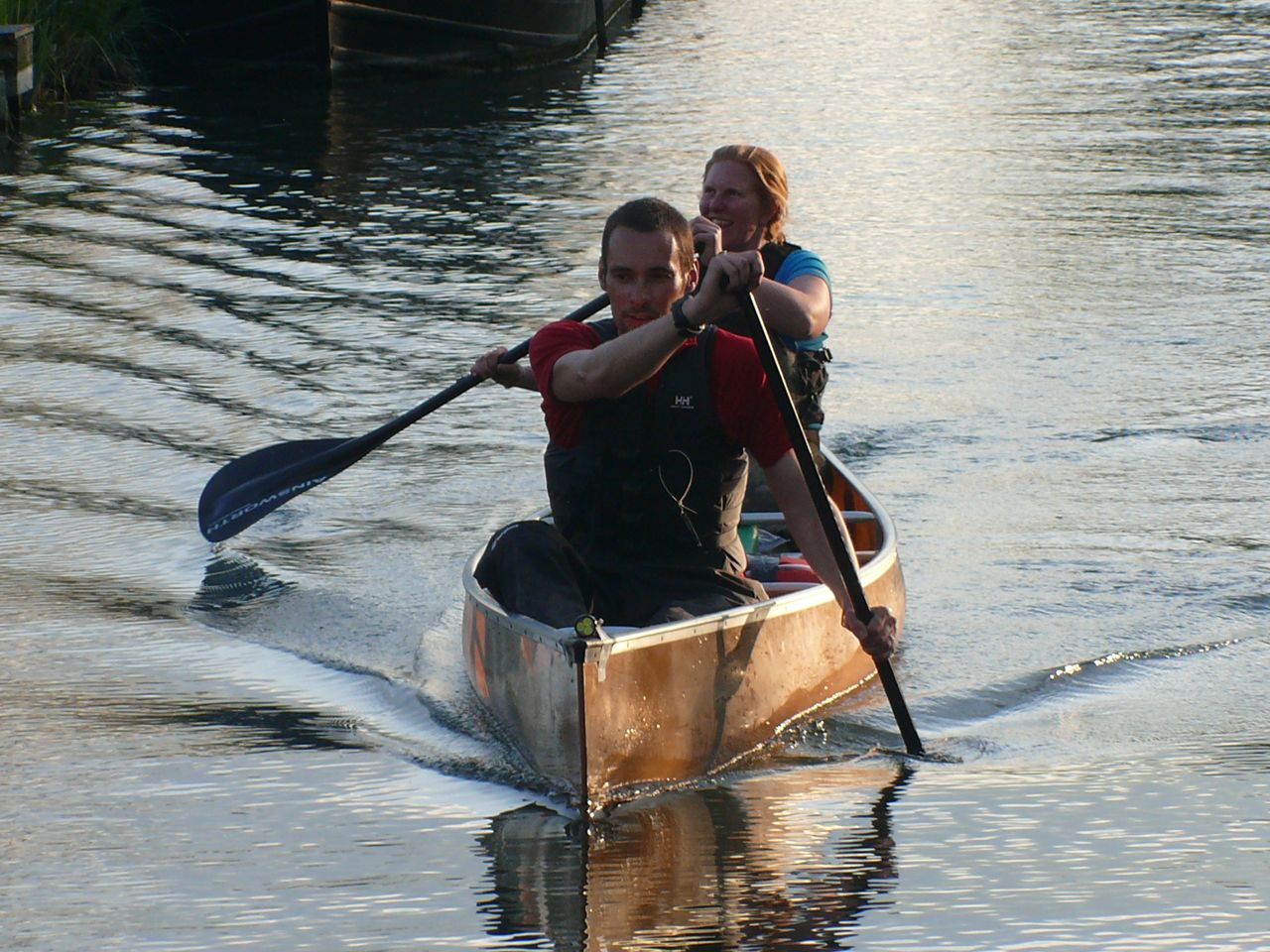
    evening

    The real darkness fell as we came into Reading. We lit up with head torches and my Exposure Diablo bike light on the bow. But the bright lights of the town crowded them out with an orange glow. Above us, laughter chattered invitingly. The smells of food and clean people wafted down, but we slipped along silently.

    Through Reading, we made it to the Marsport shop. This marked the point where we joined The Thames, and where we had made it through the final time cut-off of the race. We hoped to make it for the morning tide but, even if we didn’t, we would still be able to finish in Westminster eventually.

    Geoff and Babs had come down to see us with encouragement and DW cake (a rich, biscuity cake that Babs has been making for year and used on DW herself). So we took time to have our first real stop of the trip. Cold was creeping in, even on this relatively mild Easter, so it was time to dress up and press on.

    It wasn’t long after this, that I went to pieces. Muscles cramped up from the stop, joints decided to protest, eyelids and spirits fell. I kept paddling in some sort of fashion, while Emily seemed to stay strong. Caffeine pills and a little food did no good. By Henley, I was a real mess. So when we stopped, I had a big wodge of the DW Cake and a load of water. Suddenly the body started working again.

    Time stretched as we peered into the river. Is that a channel over on the left? No, it’s just a gap in the trees along the bank. What’s that white thing on the water? Quick, go left! It’s a reflection. There was a line of boats along the river, and you could often delegate the navigation to just following the lights ahead. But as the kayaks powered away, they would become hidden by meanders. Weirs would rumble from a nameless direction as we tried to find the channel. In one instance, I thought I could see the hi-viz of boats ahead of us and we started in that direction. Only to realise that the hi-viz was on the marker posts for the weir and a big red “caution” sign was on the edge of or view. None if it was really that dangerous in the end – we could always see in time to react – but the sense of dislocation was acute.

    For a while, we kept ourselves awake by chatting. Eventually, I disappeared inside myself and couldn’t chat. Paddling is so much less engaging than biking that my eyelids were drooping and my head dropping. We looked optimistically at the sky, bathed in lights from Marlow and Windsor, searching for a sunrise that was still more than an hour away. The distance travelled became irrelevant, the only goal could be to keep moving until the sun came up.

    When I did look at the GPS, the news was bad. We had slowed down a great deal and were not looking likely to make the morning tide. Despite the strong flow of the river, we were moving too slowly.

    As it always does, though, the sun did rise. And we were onto familiar territory. Food and sunlight brought some power back into our paddling and Emily predicted what times we would need to make at the next few locks. Suddenly, we were arriving ahead of those times. We zoomed past our club (Hampton Canoe Club), correctly taking the far side of the river to avoid rowers. Some of whom were actually encouraging us along. We could only wave and apologise to Carole and Clive who had come out at the club to see us past.
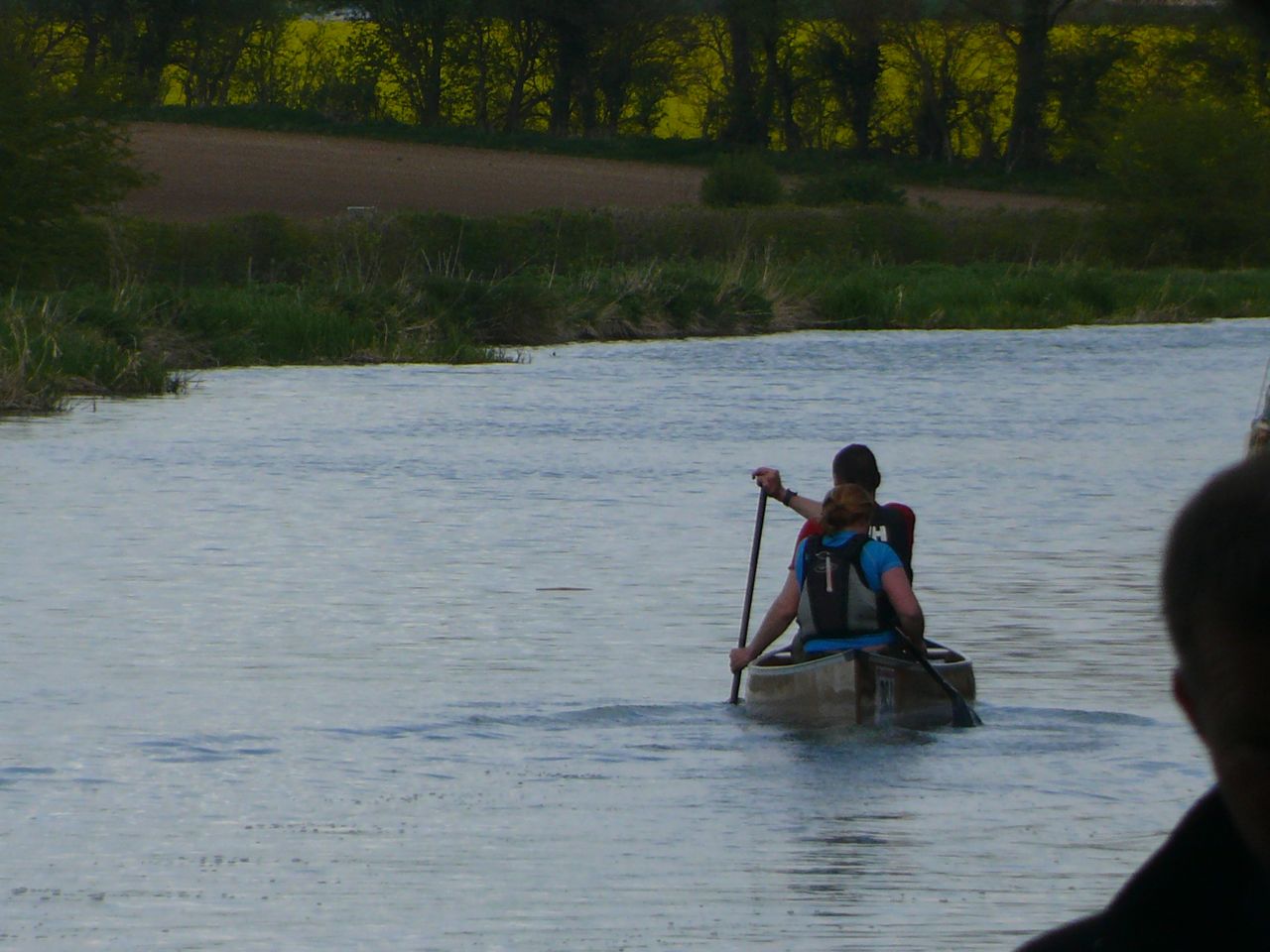
    stacked_hands

    PS check out the super-stacked hands in the photo above.

    The Tideway

    We had made it to Teddington in the nick of time. The remaining 17 miles was still a fair paddle, but an atmosphere of relaxation descended on the little pack of boats. We all felt sure that we would make it now. We dipped our paddles in the water, we chatted, we let the river flow, and then the retreating tide pull us along.

    But time and tide wait for no man. We were well into the outgoing tide, and soon it could turn against us. Spotting bridges and landmarks, the fatigue of the previous hundred miles took their toll. An hour in, we weren’t relaxed anymore, but we weren’t able to hurry either. Ferries passed, sending waves that slopped right over our bow and puddled water around my feet. Currents swooned around fixed barges, requiring caution to negotiate.

    When one sideways current thew us towards such a barge, we had to power our way out. No problem but, afterwards, the kayak behind had disappeared. Emily worried and wanted to phone race control to check on them. So, we drifted while she tried to call. No answer, so we paddled on, then tried again. Still no answer. Eventually, a boat became visible behind us. We dallied around until it caught us: the missing kayak. They had just stopped to stretch out their legs.

    We had not long moved on when we saw a kayak on the shore, with one kayaker too stiff to get out of their cockpit. They said they had called for help, but Emily wanted to turn around to be double-sure. They were OK, and took Emily’s advice to get as far up the bank as possible.

    Back on our way, the tide was hardly helping us at all and there were 3 miles to go. As Vauxhall bridge came into view, we were definitely fighting it. We saw more kayaks shored up, unable to make the last few miles. But there were safety boats buzzing around to take care of them now, all we could do was paddle on and try to get there before the tide overcame us.

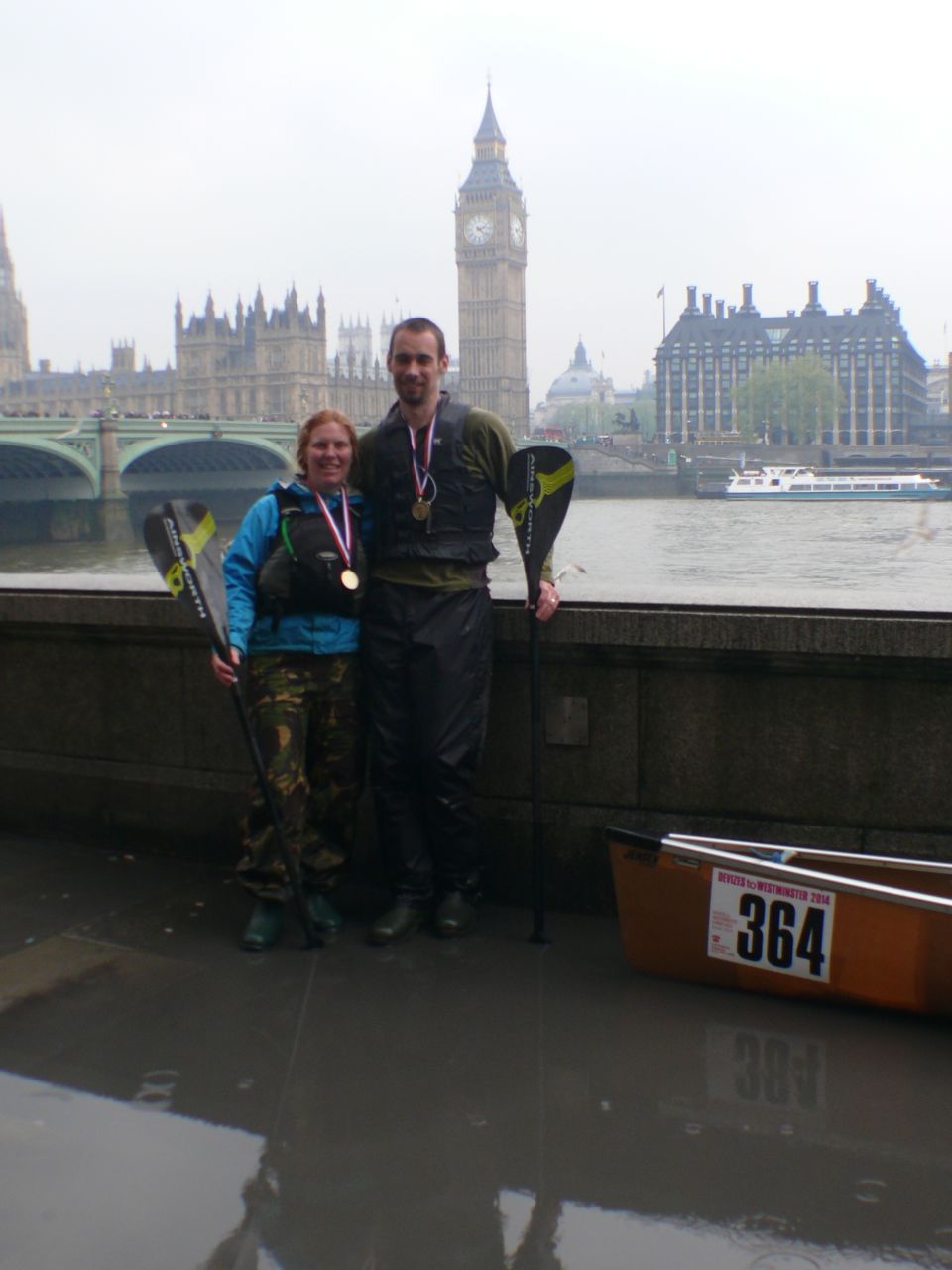
    Waves came in sideways, bouncing off the high walls of The Albert Embankment and hitting us unpredictably. Now we were in a fight. Fatigue was replaced by adrenaline and we were sprinting the final 1/2 mile. Despite all our effort, I could see 2mph of forward progress on the GPS. Moving forwards, not giving in, not slowing down. Westminster Bridge inched forward, the steps at the finish came into view, and finally – finally – we were in.
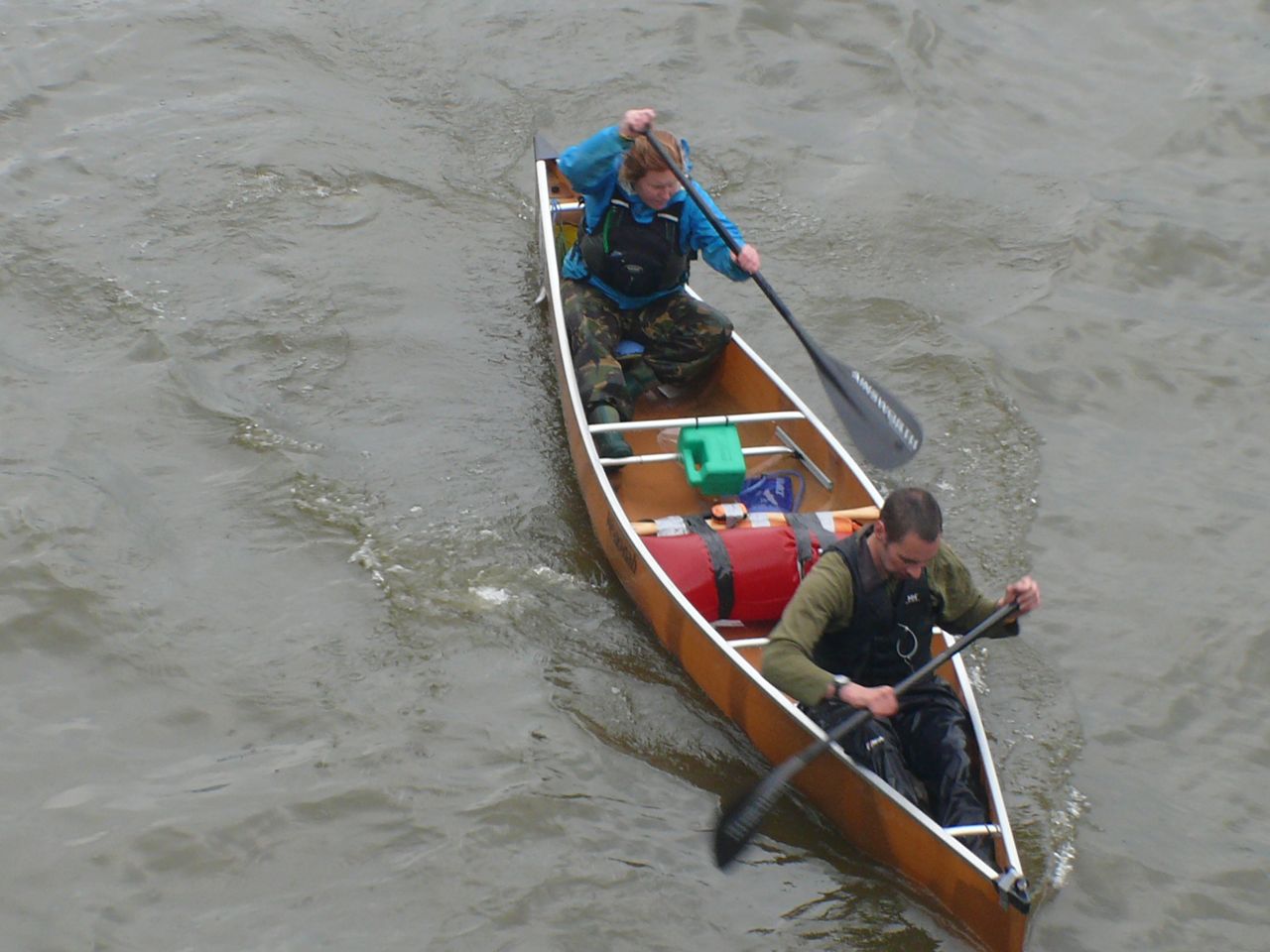
    tide

    Massive thanks to:

    Emily for organising pretty much everything, keeping us going, and being awesome.

    Pete for supporting us and following along the whole course to be there with us.

    Geoff and Babs for lending us their amazing canoe, for bringing us DW Cake at Reading, and for supporting us around the event as well.

    Ainsworth Paddles for providing us with carbon paddles to use. When we went out with an array of different paddles, their new ones were undoubtedly faster and lighter than any other combination we tried. And they made storm-trooper helmets for Star Wars. It doesn’t get any more geek-tastic than that.

    .finish
    What’s Next?

    Of course, an adventure is not an adventure without a more ridiculous adventure in the pipeline. So, for our next canoe event, we’ll be taking on The Yukon 1000.
  • Iditarod Stats

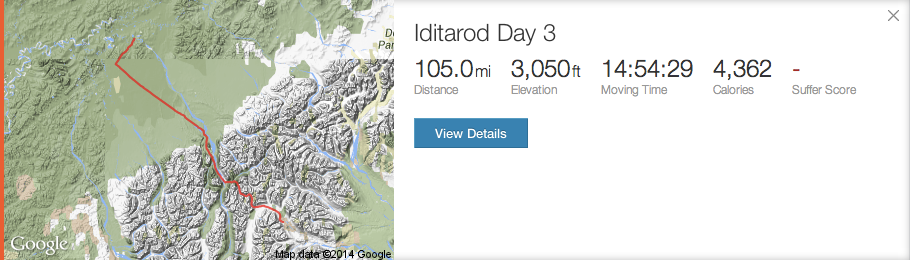
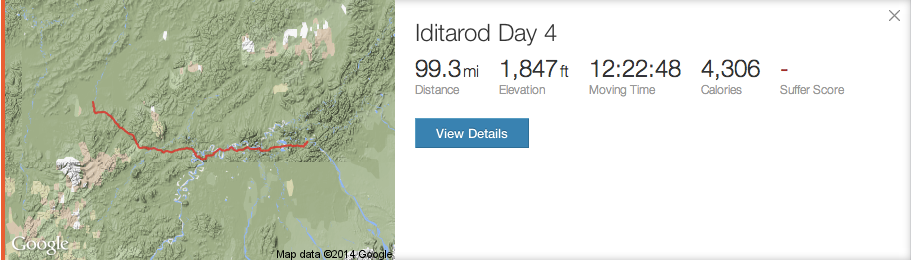
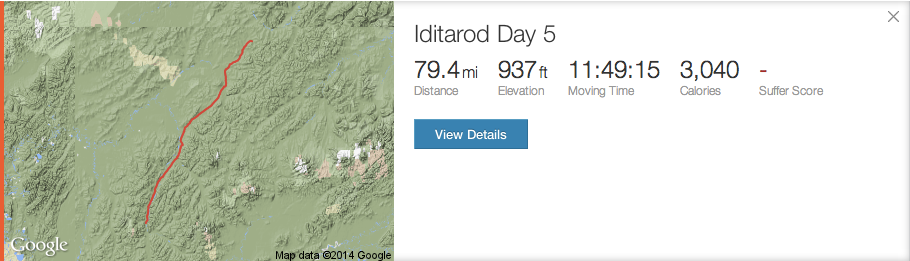
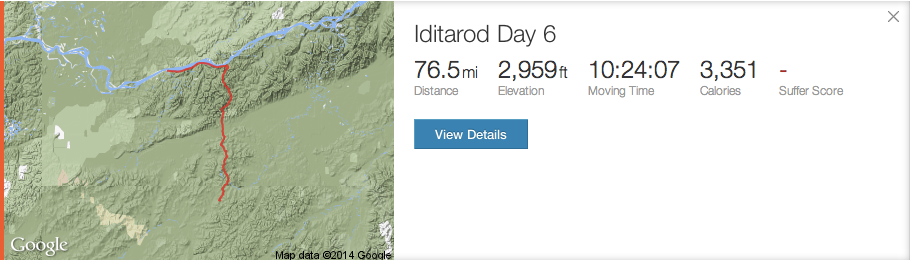
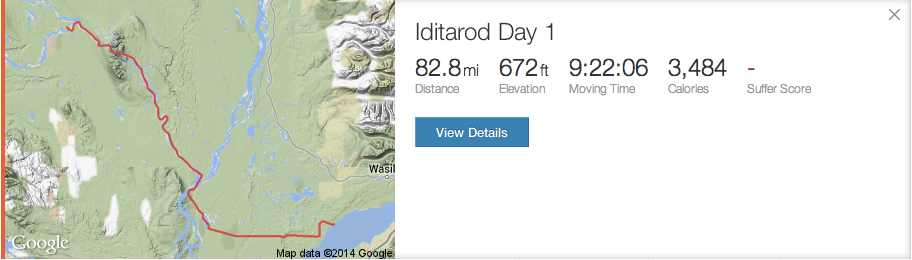
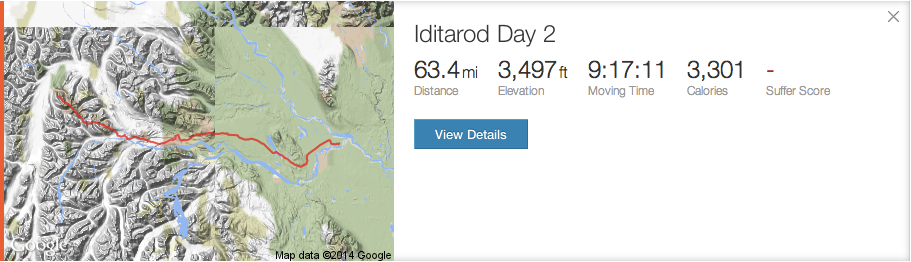
    I’m working on a proper story about the Iditarod but, in the meantime, here are some stats!

    I recorded the whole ride on my GPS and put it onto Strava. However, they are set up as private rides so that people can’t download the track file. Getting lost is part of the experience, and trying to follow these exact tracks might lead to dangerous situations on the ice as conditions vary from year to year.

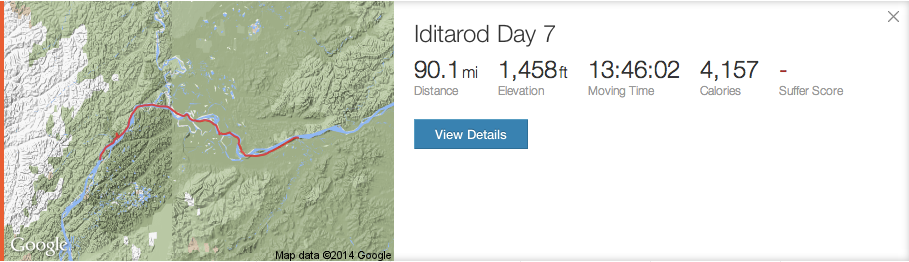
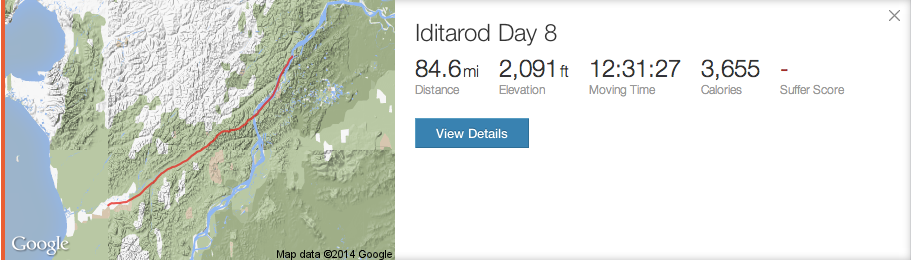
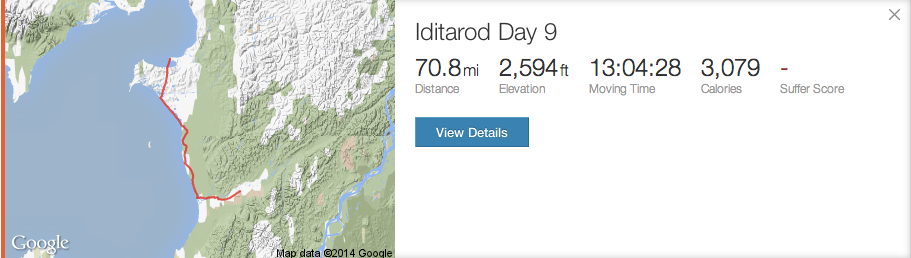
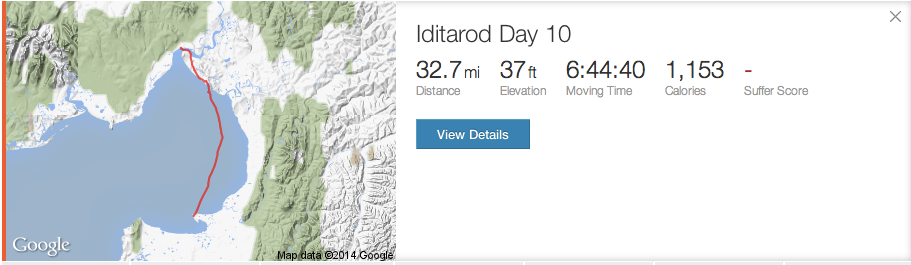
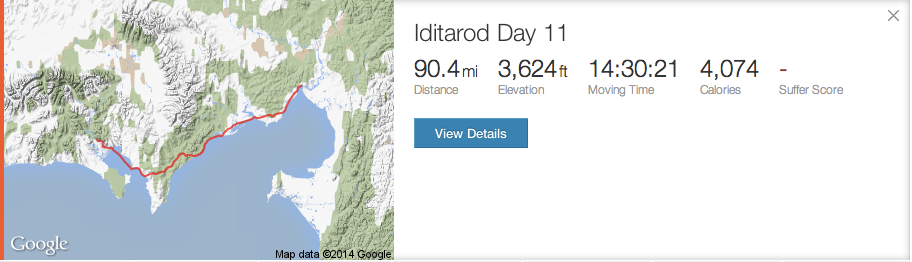
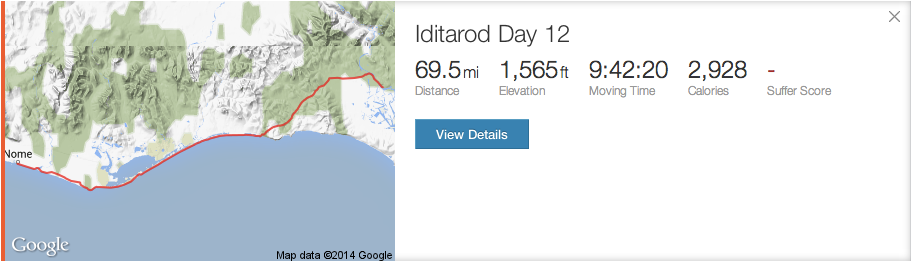
    day1day2day3day4day5day6day7day8day9day10day11day12

  • Pre-Iditarod

    Obsessions with the weather can get out of control before the Iditarod Trail Invitational. You can’t change the weather, but you can do your best to be prepared for whatever it might throw up.

    Yesterday, it was -27C in McGrath. For the race start tomorrow, it’s due to be around 0C in Anchorage. It might seem like that’s all somewhere within the range of “cold”, so it’s not too significant. But it is still 30 degrees. You have to picture the difference between a sunny day at 20C and an “extreme” English winter when it hits -10C. Imagine packing for that kind of variation.

    At one end, +1C means mushy snow, slippery partially-melted ice, open water, possible rain, and sweating into the clothing that you need for when it gets colder. At the other extreme, you can get a nice fast trail, but it will be cold enough for the breath to freeze on the way out of your body; too cold to breath the air directly when exercising; the grease on the bike will thicken and drag; metal will burn you on contact; compressed gas stoves won’t light as the gas won’t vapourise. And the old trick of throwing water into the air will cause it to freeze before it hits the ground

    With this year looking tricky, I’ve brought along waders for river-crossings, and ice cleats for my shoes in case I need to walk on slick ice. Studded tyres are preying on my mind, but I don’t have the money to pitch at them and there don’t seem to be any left in Anchorage anyway.

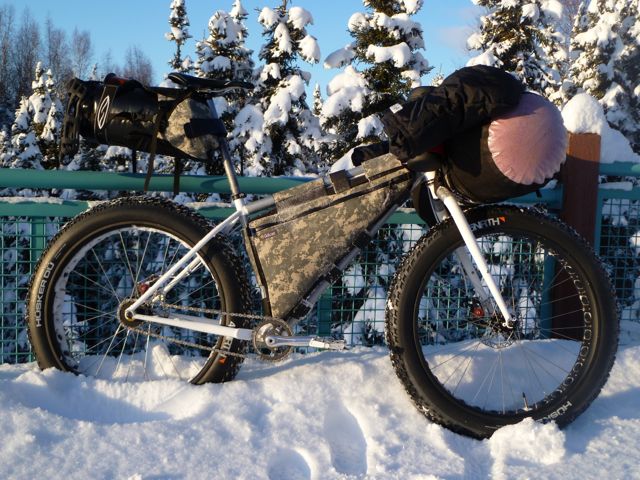
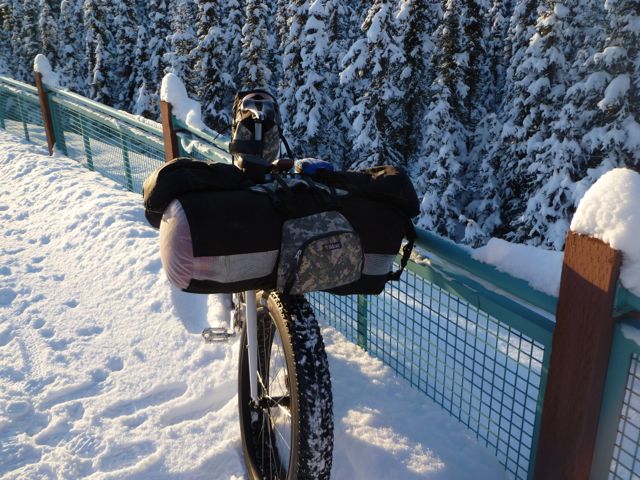
    So this is what the kitted out bike looks like:

    P1000668

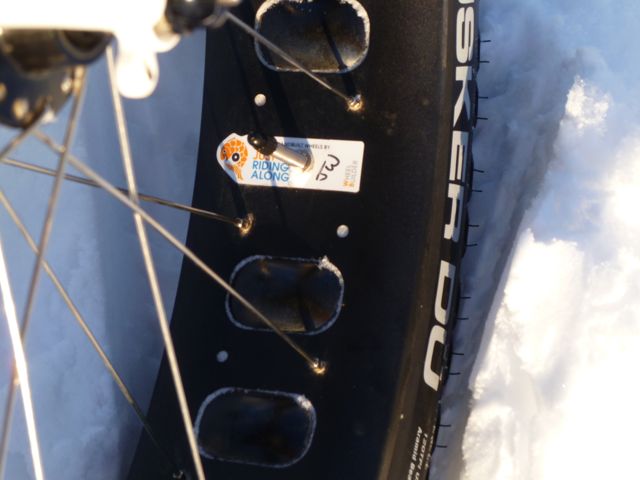
    A Singular Puffin  (production instead of my old prototype). It handles great without the luggage (I’ve been riding it lots around Devon!), and surprisingly well with it. Lots of tyre clearance gives me space for 100mm rims built into wheels by Just Riding Along:

    P1000669


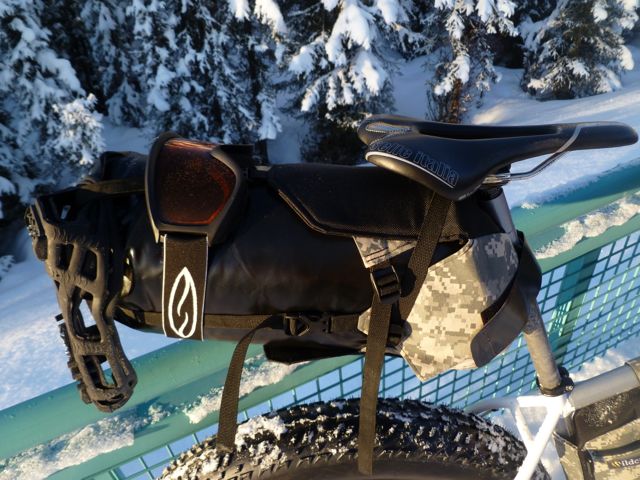
    Luggage from Wildcat Gear: First, the new super-sized rear “Tiger” harness, in which I pack an expedition down jacket, waders, a spare tube and some stove fuel. Goggles and ice cleats are attached on the outside.

    P1000672

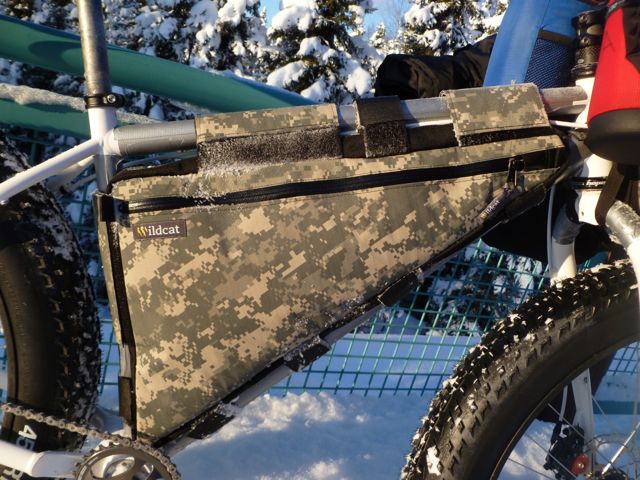
    Next, a flared “Snow Leopard” frame-bag. Just a couple of rarely use tools, and the rest is all food. The gate-style opening on the non-drive sides means I can get every last crumb of food out of it. The thin pocket on the other side is great for stuffing wrappers etc. into without littering the trail. A hand-sized gap is left on the top-tube near the seat-tube to aid carrying. Double-wraps of velcro over the top allow you to fine-tune the tension across the frame bag and make sure can easily open the zips with one hand.

    P1000674

    Up front, is a new super-sized “Mountain Lion” harness holding a canoe-sized drybag. With 4 straps across it, and an extended wrap going underneath the drybag, it’s stable and protected from the tyre in case of slippage. In the drybag is a -40C rated sleeping bag, silk liner, thermarest, stove, lighter, pot, fuel, synthetic down trousers, waterproof trousers, spare socks, a couple of those tiny camping towels (to stuff into my boots when drying them out), and big mitts.

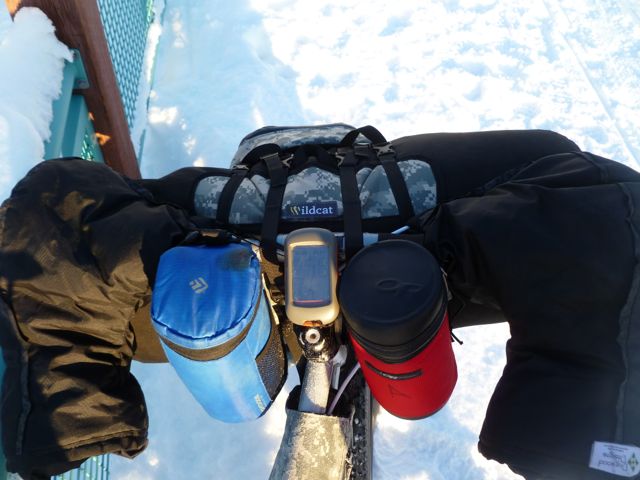
    Bars are USE Carbon Atoms. In a stiff wind they suck noticeably less heat from your hands than metal parts.

    Dogwood Designs pogies are very warm indeed. Too warm for the conditions we’re setting out in, but having used them in Yukon-winds, they’re a solid piece of gear.

    Nalgenes in bottle jackets keep the water situation simple.

    And a Garmin Dakota 20 has the waypoints along the route programmed into it, so I will be able to get a vague idea where I’m going. The worst of the navigation is near the start where there are many snow-mobile trails going in all kinds of directions. Once you get out into the wilderness, there is often only one trail.

    P1000671

    The front pouch is not a standard Wildcat thing, but I asked them for it because quick access to key items is really important in cold conditions. So, it contains more frequently used tools, pump, buffs, sunglasses, paperwork, iron supplements (there’s not a lot of broccoli on the trail), caffeine pills (not for regular use), and a toothbrush (it’s all to easy to neglect looking after yourself like that – keep the toothbrush handy, then you have no excuse to skip brushing).

    P1000670

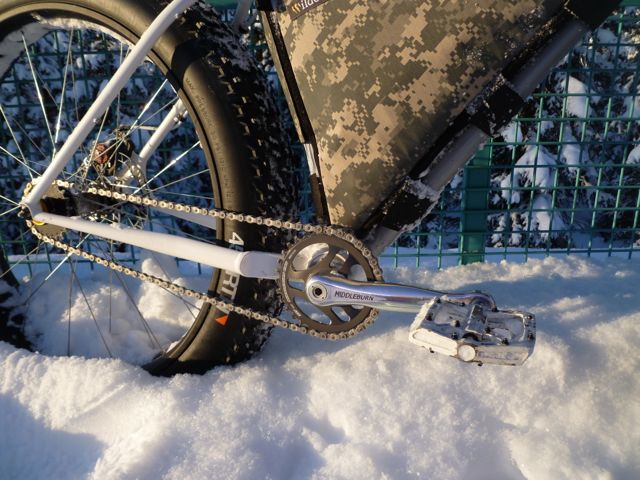
    Middleburn’s relatively new fat cranks provide the drive. Infinitely better looking than Surly, and much simpler to fit. I don’t have the weights, but they felt a lot lighter than the Surlys while fitting. I’m going with a 32:22 ratio that is a tiny bit longer than what I had last time to Nome.

    P1000673


    General riding kit will be

    • Muck Boot Arctic Sport boots – 100% waterproof and warm. The only slight worry is drying them out from sweat – hence the little towels mentioned above
    • Gore Xenon 2.0 Windstopper tights
    • Ground Effect mixed merino/synthetic base layer
    • Gore Oxygen softshell
    • Swapping in/out a thin fleece mid-layer, and liner gloves as required

    So that’s it, the food is posted out along the trail, the bike is packed, there’s nothing to do but ride. Even riding around the parks in Anchorage has been a joy. I’ve been drinking in the big skies and mountains. The light feels so long and the air so crisp, that just being in Alaska is great.

    Re-acquainting myself with folks at the Speedway Cycles pre-race party was fun as ever – and the usual question is who will you end up seeing more of on the trail? It’s a bumper crop of riders Nomeward bound, and I have no idea who is going to be where. All I can do is keep a level head and go for it!

    P1000677

  • Look North

    Not that North, further.

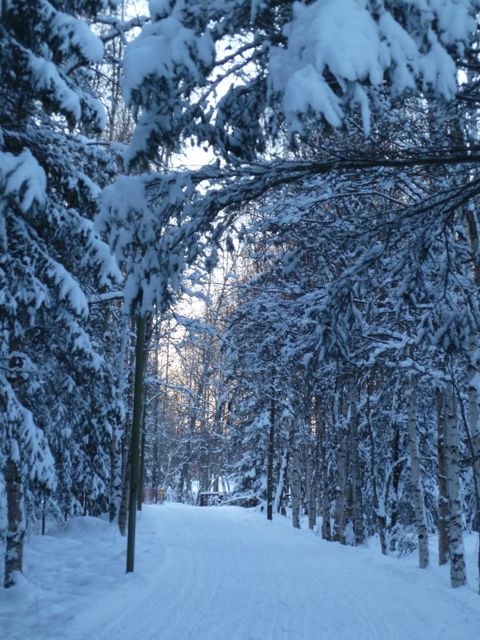
    So far North that the lakes and rivers are frozen hard. Where omnipresent snow has 100 different kinds of crunch under your feet. Where the nights are savagely, beautifully cold and accompanied by the dance of the aurora growling across the sky. Where wolves run and bears sleep. Where it can get so lonely that the wind is your only companion, leaning hard on your shoulders; chasing clouds on and off the stage.

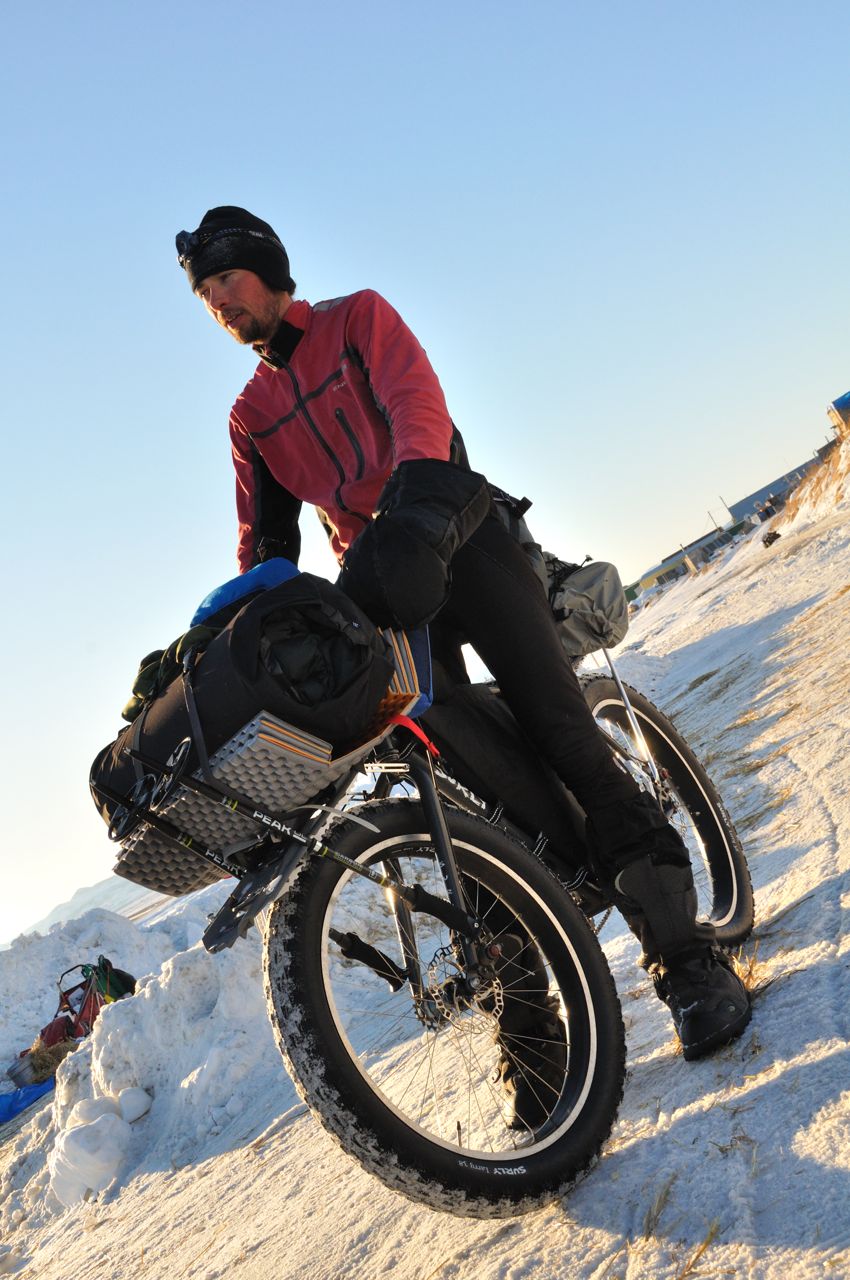
    Pulling into Unalakleet
    Pulling into Unalakleet

    The Iditarod Trail Invitational always looms large. It’s the race. The one I rode the Divide to train for. It haunts me, waiting for me to come back find out if I have learned anything since last time. There can be no better motivation for getting out in the wet Autumn weather than the fear of ending up on the desolate ice thinking, “If only I’d trained a bit harder”.

    You will never appreciate a sunrise as much as the morning after pulling an all-nighter on the Iditarod Trail. When the temperature is so low that there is no way to breath without a face-mask. The moisture from your breath forms long icicles on the mask, and they poke your chest every time you look down. If you let the pace get too high and start to sweat, condensation forms on your goggles and freezes. You must balance clothing and effort against an ever-changing environment.

    The night-time view through tinted goggles and a tiny head-torch is just a small patch of snow. Sometimes you can’t tell whether you are going up or down. There is no horizon to be seen. Your effort changes as the snow changes, and your fully-encased head is missing its normal cues about orientation.

    So, as the invisible mountains become shadows, you want dawn to hurry along. Purple is drawn in vivid strokes, bringing hints of gold. But the shadows are still upon you. Sunlight is all around, but not a drop to warm your skin. And finally, it comes. A couple of degrees of heat. A boot to the black thoughts of the night. The gold seems to go on forever before the day becomes whole, and there seems to be no finer place in the world.

    That is just part of the reason why.

    The strategy of racing against people over days; the camaraderie with the other riders; the mushers and their dogs; the people who live in the remotest places with the warmest welcomes; the self reliance of bivying out on the ice with everything you need on the bike. So many reasons to go back.

    The wherefore is coming together now. A different bike – A Singular Puffin with fun handling and 100mm rims. Different kit setup – just bikepacking bags (from Wildcat Gear), and no racks. A whole new level of experience with sleep deprivation (see the final day of the Highland Trail). The experience of having been to Nome once already. Lessons learned about how to take care of myself out there.

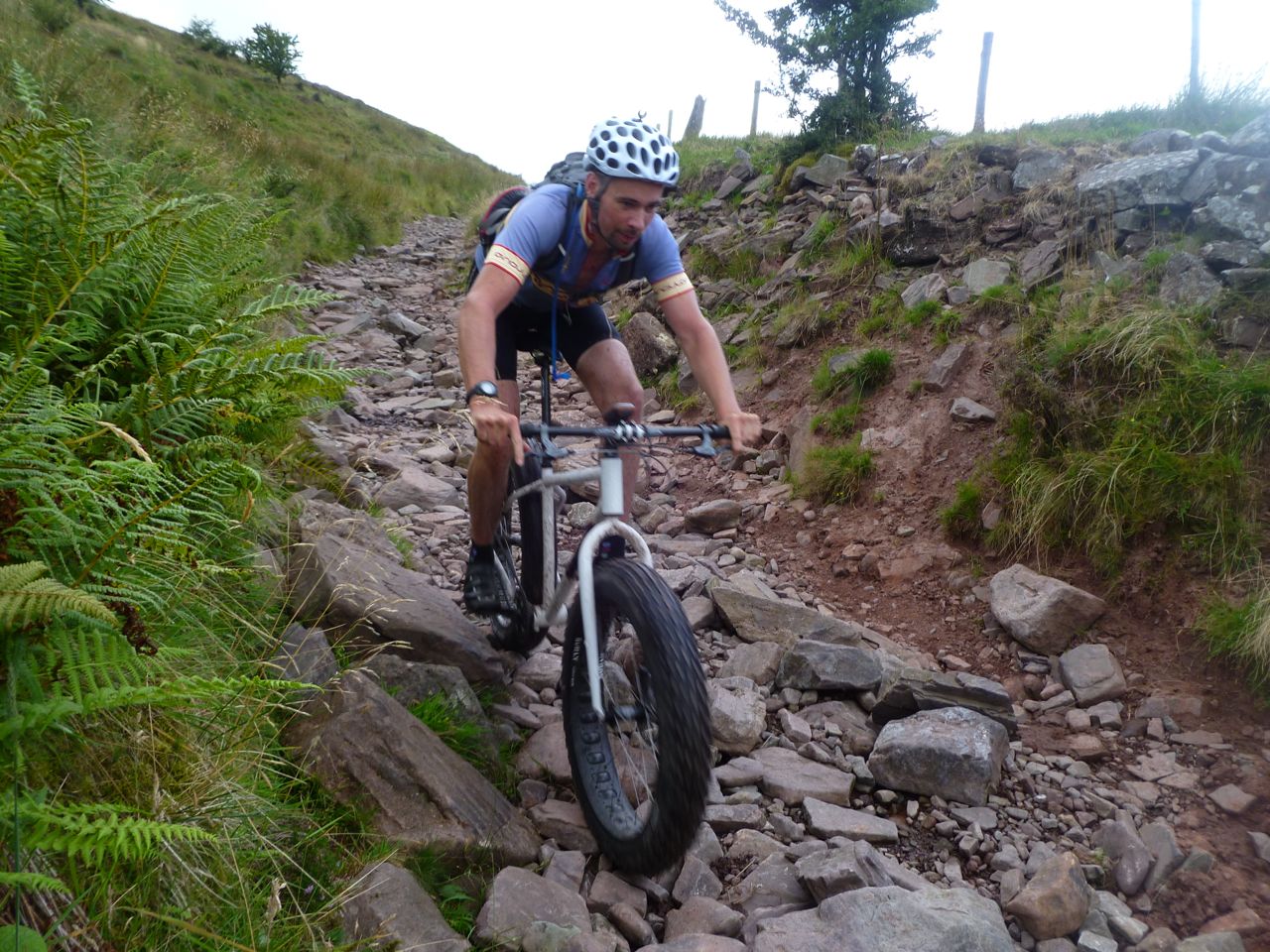
    Playing on the Puffin - Brecon Beacons
    Playing on the Puffin – Brecon Beacons

    With a thousand things to do other than train for the race, choosing what to do is going to be crucial. My “plan” is long road rides to maximise time on the bike vs. travel time (although getting moved in to North Devon should solve that problem). Regular MTB, because it’s more fun and better for upper body strength. The MTB will be a mix of the Swift and the Puffin. It’s important to ride the bike with the wide BB plenty to acclimatise your knees – I suffered badly from knee pain in Iditarod 2011 because I hadn’t ridden the Pugsley enough. And regular running to make sure that joints and muscles are ready for spending time on my feet, dragging through snow.

    There is a ton of work to do on my fitness before February, but fitness is never the whole story over 1000 miles. The certainty of my drive to finish, and to push hard is the most important thing. Alaska can through a so many things at you. Only the motivated and adaptable will flourish. So that’s what I’m aiming to be.

  • Singular Puffin – first impressions

    I picked up my Singular Puffin fat bike yesterday, and went straight into two test rides with a nominal amount of work in-between.

    Puffin
    Puffin

    First impressions are that it has a very lively ride: easy to manual and throw about. Geometry also works well for climbing, but it’s not exactly a rocket up the hills. That said, the dusty loose bits of Swinley can now be approached with a “Straight up the middle” rather than a “Desperately seeking grip” approach. I’ve currently got On One tubes weighing in at 700g each, so it’ll probably climb better without 2kg of rubber around each wheel(!).

    The top tube is pretty dropped which is great for the aforementioned throwing about and also for snow. A common Iditarod scenario is failing to float on some mushy snow; having to put a foot down; said foot going straight through the snow; and balls getting whacked on the top tube. The Puffin allows a bit more space before you get whacked.

    The cornering performance is great, encouraging you to get over the front and aggressive in the turns. As with any fat bike, there is some initial resistance as the tyres push against the turn, but you have frame geometry in your favour. Pretty soon the Puffin has you cornering hard and wondering if there is any limit to the grip offered by those massive tyres.

    I still need to mess around with tyre pressures a bit more as tiny changes make a big difference when the tyres are so big. Can’t wait to go bash it into some rocks in Wales next week!

    The build is:

    • Singular Puffin prototype frame
    • Surly Clown Shoe 100mm rims with Hope Fatsno hubs (built by Just Riding Along)
    • Surly Larry front / 45 North Husker Du rear tyres
    • On One fat tubes
    • Surly Mr Whirly cranks
    • USE Atom carbon bars
    • USE Race stem
    • USE Sumo Carbon seatpost
    • Avid BB7 brakes
    Swinley Forest Singletrack

    More pictures on Facebook: https://t.co/NoBp5J1cNp

    Sam’s going to be doing pre-orders for the production version, so contact Singular if you want in on the action!

  • EWE 2013

    So what the heck is happening with EWE in 2013?

    Well, it is still happening but more quietly this year.

    Last year, I had to try to make a song + dance about it to make sure it happened: to make sure I kept pushing it ahead, and to make sure there was enough momentum to get people to help with the route. In the end, we got out there and rode but the wet weather caused a lot of wear + tear on us as riders. There were some amazing trails, and some trails that would more usefully have been on roads. In the end, though, we weren’t able to finish the route

    So this year, the route has been updated and the sun has been shining. The main updates to the route are:

    • New route through the Lakes including local knowledge (tracks that are on the ground but not on the map! Tracks that are known to be fun!)
    • Use of the C2C route to get from Penrith to Newcastle
    • New route from Machynlleth to the Kerry Way (avoiding where there are tracks on the map, but not on the ground!)
    • Numerous small changes to avoid:
      • Crazy-steep overgrown climbs in Somerset
      • Slurry strewn, electric fence blocked, nasty, nasty track on Wenlock Edge
      • Riding round in circle looking for missing tracks before Cannock Chase
      • Bits of private land
      • And more low points from 2012 🙂
    • Total distance down to 1180 miles, software-estimated 124,274 ft of climbing

    It looks like the only riders taking up the challenge will be myself and Lydia Gould. So less of a race, more of a ride. But it’s going to be a heck of a ride. And with no Steve Heading breathing down my neck, maybe the chance to take photos.

    I’m excited about it. Some parts will be completely new to me. Time to plunge into England and Wales!

    The new route is available to view here:

    The race starts on:

    • 28 July, 8.00 am
  • “MyProtein” Recovery Drink

    The nice folks at ProBikeKit contacted me to see whether I would be interested in trying out their MyProtein Recovery drink and a couple of MyProtein bars. Of course you say “yes” to free food!

    A few years back, I had thought that sports nutrition products were a waste of time and money. Then, I won some Torq Recovery drink at a race. Not only was it tasty, but it definitely seemed to let me ride harder, get stronger, and recover faster. I was pretty hooked on the stuff. So much so, I started the Tour Divide with 1.5kg of recovery drink powder in order to have some each night.

    Recovery drink is intended to be used after particularly intense rides to help refuel your body. In that 20 minutes after you stop, you are most ready to get some energy back in. So a drink that you can prepare and drink right away is really useful. On top of the simple fuelling, various additives can also help the repair/rebuilding process.

    I’m no sports scientist, but I do ride a lot and use recovery drink regularly (including the occasional slip where I run out and am reminded of how beneficial it is). So, I’m going to take the concept of having a recovery drinks at all as a given. I’m convinced they work. The best way I can assess the MyProtein drink, is by comparison to the Torq Recovery that I have used in the past.

    First up, price: MyProtein Recovery is about 1/2 the cost of Torq Recovery and the recommended use requires less powder per drink.

    Taste-wise, the Torq drinks are very milky and thick. I find their milkshake angle very comforting after a long ride, but less gluttonous folks like Emily find them a bit rich. MyProtein Recovery is closer to orange squash in its taste, with a distinct saltiness to it. I note that it claims to have electrolytes, which is actually a good selling point to me as I often end up finishing rides slightly dehydrated. The saltiness in the taste reminds me of what a nurse told me when I asked her about sports drinks compared to the rehydration sachets that you get from the pharmacy. She said that the pleasant taste of sports drinks was a good indicator that they don’t have enough electrolytes to rehydrate as effectively as the nasty-tasting sachets. So, although the My Protein drink tastes a bit odd, maybe that’s because it’s actually doing its job. Having been using it for a while, I quite like it now; and when I shared it around the team at Mountain Mayhem, the feedback on taste was positive.

    Performance-wise, I can’t really tell the difference between Torq and MyProtein. Both feel good after a ride. With so many variables and no sports science lab, all I can conclude is that they both work well enough to choose between them on the other factors.

    So it seems like My Protein has price and electrolytes on its side, and Torq has milkshakey goodness. It was great to see that there are alternatives out there.

    As for the bars, well, I only had a couple and they tasted pretty nice. Again, actual scientific benefit is impossible for one person to measure. The night before the Highland Trail Race, I didn’t actually manage to get any proper dinner (ever tried to buy vegetarian food from Scottish service stations? Impossible!) so I made do with some carbohydratey stuff that I’d bought to eat on the trail and one of these protein bars. The race went pretty well, so I can’t complain.

    Thanks to http://www.probikekit.com for sending me stuff!

  • Highland Trail Race – Day 3

    See also:

    The alarm buzzed into my exhausted mind. It had a few layers to dig through, but eventually it found some kindling inside my head. A spark, and consciousness started to spread. I could feel the wet sleeping bag against my face – I had been too tired to actually pull it into the bivi bag the night before. Loch-side and pine trees were painted in muted colours, and I felt wretched. I had to smile a little, though. This was why I had brought the warm clothes. I was going to put all of them on, and after a couple of hours of riding, things were bound to look up.

    The difficult part was getting from lying cold, tired, and hungry in a wet sleeping bag to being dressed and on the bike. Not only had I not zipped up the bivi, but I’d also forgotten to set some food within reach of my head for breakfast. Like a giant wet, sweary caterpillar, I hopped over to the bike and retrieved some carmel waffles. All too soon, I’d eaten them, and had nothing left to do but dress.

    The moment I was out of the sleeping bag, the shivers took over my body. Hands, feet, teeth and chest were buzzing and clattering away as I methodically added layers. Everything I had worn in the night was soaked, but adding a fleece jersey, wool socks, and thermal longs made it more bearable. Squashing away my gear, and clipping it back onto the bike, purpose was returning to my bones.

    Wind and rain met me as I finished the off-road from the night before. All the while, I was scanning for tyre marks in the mud. I had slept – what had the others done? Had they got the jump on me? I couldn’t see anything conclusive. On tarmac, I pedalled hard to devour the easy miles. I was happy to overheat a little now – the sweat wasn’t going to make me any wetter. Mile by mile, I was waking up and closing in on Torridon. I passed shelters that could have made for a better bivi last night, and worked my way around the mass of Beinn Eighe, feeling its gaze track my ant-like progress.

    Soon enough, it was back to pushing the bike up over rock and water. Brief bursts on the pedals would surge me upwards, but there was too much trail still ahead to attack like that. The sun was finally breaking through, bringing the glen I had just ridden into a sharp foreground. Mountains sat out behind the glen, with snow and crag. Each one representing another adventure for another day. I looked back along the road, trying to catch a glimpse of following riders. Nothing. For now, the task was simple – push on.

    I was more than ready to ride when the gradient finally relented. With legs ready to work at a different motion, I powered into a fierce wind. The glen was far behind now, and high country ruled. Up here, someone had dumped a mountain bike playground. Granite moulded into little bowls and curves was an invitation to throw the bike around and have some fun. Pumping the bike through dips and jabbing on power up little climbs, the fun was back in a big way. The wind that pushed weeds to one end of the loch up here was making me improvise lines, but there was space to play with. Skirting a second loch and still climbing, I could see the summit on my GPS but it still seemed far away on the ground.

    Finally, the descent. But not rideable enough. Not right here, not right now. The trail had an unnerving habit of being fine, and still fine, and then suddenly pointy and deadly. Controlled and cautious, I worked down where I had hoped to fly down. With an easing gradient and better sight lines, I could risk more rolling and speed. Occasional stoppers meant I had to stay sharp, but progress was coming.

    With that last bite, the savagery of this section was over. Miles rolled by uneventfully until Dornie and the chance to buy some real food. I scoured shelves laden with meat pies and rolls and sandwiches until I finally found something veggie and some chocolate milk. Staggering and stinking, I paid for the food. Outside, some guy in a hat was taking photos of my bike. Steve Heading – my rival in The Cairngorms Loop and EWE, a friend from hard miles and similar ambitions was here to see the racers come in. We chatted and I ate, fiddling with a few things that needed attention on the bike. Steve wouldn’t tell me how I was positioned in the race as that might give me an undue advantage. Eventually, he did say that I had been the first rider he had seen in Dornie and he had been there for a while.

    [singlepic id=203 w=320 h=240 float=]

    Happy to think I was in the lead, satisfied with some real food, and on the final miles (in truth, there were still 100 miles to go!), I started to climb out of Dornie feeling great. Andy Heading was a short way up the road, and I couldn’t pass without stopping to chat. Andy had been one of the first people I had read about on the Iditarod Trail. We had never met before, but he had been part of the inspiration that had taken me out there and, eventually, brought me here.

    The head of Glen Lichd was an extraordinary push. Extend you arms, brakes on, take a step. Repeat. Golden light, and folded terrain were at my back as I toiled. My mind was slipping into maintenance mode, the afternoon wore on with no urgency at all. Any progress was enough. When I misjudged a rain-bar and pinch-punctured my tubeless tyre, it was repaired from a seated position but only after taking time to eat. When my brakes pads felt worn, I took an age to swap in new ones. Rudderless, but creeping forwards, I longed for the trail to Fort Augustus to be easy.

    It wasn’t. The trail surfaces were good and generally rideable, but the climbs often exceeded my strength. To make matters worse, I had started to see tyre tracks in the dirt. Two sets of tracks, one with Ikons, one with what could be Racing Ralphs. Maybe Mark Goldie and Phil Simcock had teamed up. Maybe they had ridden through Dornie while I was eating. The tracks didn’t wobble, and they weren’t accompanied by footprints in places where I was walking. Through fiery coloured mud and thick moss, across rivers, up forest roads, their tracks didn’t wobble as I failed to find the strength to ride continuously.

    My mind was churning. Hours of thinking that I was going to win this race were shattered. I still had to get to the end in time for my canoe trip, but this was going right to the pit of my mental and physical reserves. Why couldn’t Steve have told me straight-out that they had gone through? Next time I got to civilisation, I would get Trackleaders up on my phone and check the positions.

    The tracks tormented me all the way through gravel climbs on service roads. I could only alternately between trudging on foot and heaving on the pedals. Looking back at the forest and mountains, the beauty of The Highlands was becoming emotional. Looking forwards, the task still appeared endless. Brake-cooking descents were the reward. Eventually, and after dark, the trail proved that it was not infinite. I rolled into Fort Augustus, picking up water from the tap outside the (closed) petrol station.

    I phoned Emily to let her know that I wasn’t going to make the start of the canoe trip in the morning. Maybe I would bivi before Tyndrum, but probably only for a couple of hours. When she told me I was doing well, I dismissed it. Third place wasn’t enough. She told me that I was miles ahead and the tracks I had been following were from people who had cut the ride short and returned along the final leg. Remotivated, I hit the Great Glen Trail fast.

    It was late and fully dark. The trail here posed no challenge other than the miles, but my brain was beginning to play tricks. All kinds of things were flying towards me out of the darkness. Fruit, stars, animals, toys. They tumbled past me. They tumbled right through me. Nothing seemed to be keeping my mind together and, as it unravelled, all I could do was pedal faster. The quicker I got off this canal and onto some engaging riding, the safer I would be. I was making good speed, but time ticked to the beat of hallucinatory camels rather than seconds on a watch.

    Banavie came into view. Somewhere here, Emily was sleeping. A cat dodged across the road. I held my arms out and stretched my back. My stomach hungered for the 24hr petrol station in Fort William.

    Whoever invented macaroni and cheese pies is a carbo-genius. I bought two of them from the petrol station, with some milk and some snack bars. All I needed was dinner and a few hours supplies to make it to the end. The shivers came back as I ate the pies on the forecourt. But I had a chance to look at the blue in the night sky. Up here, at this hour, light is not far away.

    I planned to ride into the forest on the first section of the West Highland Way and see. Bivi if I needed to, or push on if it felt right.

    It felt right.

    I felt OK, I had a canoe trip to get to, and my sleeping bag was soaked anyway, so I rode. The sun rose as I climbed through the forest. Out of Fort William on fairly easy trails. I was disappointed to be pushing the bike when it looked rideable, but the legs said no. Not stopping was the main thing. Descending into Kinlochleven, I was heavy on the brakes and medium on the safety-first walking.

    I knew that pushing over The Devil’s Staircase was the last big challenge of the ride. I’d done it before, and there was no doubt that pushing was the only way. As I pushed, I saw two riders in full-face helmets sat back-to-back on the side of the trail. They had Go-Pro cameras on their helmets. They were going to have fun riding what I’d just pushed up. As I got closer, I smiled in their direction, then realised that they were actually a pile of rocks. Daylight hallucinations were coming in.

    I glimpsed Glencoe and blue skies through my peripheral vision, but  the twisting trail down the Devil’s Staircase took my full attention. A point of the hips was the only way to make the bike turn around the rocky switchbacks. Braking hard, rolling the rough stuff, it was 100% focus up here. Before long, the height was gone and all that was left was the jaunt back over what I remembered as rolling hills.

    A guy in chinos and a white shirt was pushing an ice-cream cart through the heather on my right. He was going to sell a lot to the West Highland Way walkers. It was another daylight hallucination and there were more hills than I remembered between here and Tyndrum.

    A burnt-out car lay on the left of the old drover’s road. How did that get up here? Again, it was a pile of rocks and my mind was rebelling. The going was good on the trail, but I was easily distracted. The end was close enough to want to just teleport there. It felt like I had all the time in the world, and I was faffing around constantly. But little-by-little, I got there.

    On the final trail into Tyndrum, there was no ceremony, no people at all. I rolled into town, cruising around a bit but finding no familiar faces. So it was straight to the Real Food Cafe. I was bewildered by being able to choose food that didn’t come out of my frame bag. As I struggled with the decisions, I said to the man at the till, “Do you remember all those mountain bikers from Saturday morning? I’m the first one back.” It was more of an apology for the lycra and the smell than a boast. “You’ll be hungry, then,” he replied. No arguments there. Just a big serving of curry and chips that started me back on the road to re-entry.

    Full results here

    Thanks to:

    • Alan Goldsmith and all the reconnaissance riders for putting together the route
    • Steve Heading for the photos and still coming up when he was too injured to ride the event
    • All the companies that help me out with kit. It’s all good stuff, I wouldn’t venture out on rides like this with anything less.
  • Highland Trail Race – Day 2

    See also:

    As soon as I woke, I started to wonder whether Mark had ridden past in the night. Phil was right here, and sorting himself out for departure. I ran through my morning routine. Eat, pack away the sleeping gear, get some snacks to-hand for the day, check my water situation. While Phil repacked, I headed down the hill to get water (he had told me about an off-trail tap he knew from the Strathpuffer). By the time I got back up, Phil was gone. I hit the trail as fast as I could, trying to catch him. My legs were neither sprightly nor defeated, they just worked. Before long, I saw Phil with a mechanical. Checking that he wasn’t stranded or injured, I rolled on by.

    With moderate gradients and the power he has, it was no surprise that Phil caught me back up. We settled into a rhythm through the beautiful country.

    Widely spaced and ancient-looking trees in Strathgarve Forest put me in mind of the Cairngorms. Powerful deer herded and ran as we worked our way along glens and over braes. Trail conditions were good – uphills were often rewarded with high-speed downhills, culminating in 10 miles of fast-going along Glen Achall. This was more like riding on the Great Divide, big skies and simple miles. A civilised morning ride, with the promise of real food at Ullapool.

    In town, the goal was simple. Find the public toilets, get some food, then get out before getting too comfortable. Despite our appearance and odour, the tea room was hospitable and served excellent soup. Avoiding the temptation of an ice-cream and a sit-down in the sun, it was back onto the bike for Phil and me.

    I had an inkling that things were going to be pretty hard out of Ullapool. But I wasn’t quite ready for 1000ft of climbing in 1 mile. That was an hour of pushing with heels dug into the turf. An hour where predictions of an arrival time in Poolewe vanished beyond our grasp. There was no mile-munching contoured descent from the top. Another loch, and then steeply back down on rutted trails. The gradient and the tightness of the downhill lines forced me into a careful pace, only riding within the bounds of what I could see. With this much caution, it was confusing that Phil wasn’t right on my tail. At a gate, I couldn’t see him and waited a little. I got that sinking sensation. It wasn’t my role here to shepherd him, and he didn’t need me to do that anyway. But the delay was so long, it could mean a rider down. Just as I started to push back up the hill, he came into sight. His rear derailleur had caught on the side of the trail and was damaged.

    At the bottom, Phil pulled off the trail to attempt to deal with the damaged derailleur. His bike had sliding dropouts, so he proposed to singlespeed it. Weighing up where we were (on a road) and the kit he had with him, I decided that Phil was perfectly capable of looking after himself from here. It was time to go and get on down the trail.

    There was some riding, but pretty soon the climb became pushing again and brought me up to Carn Na Canaich where white rock lay down a fun trail. Afternoon was creeping across the sky and, as the wind picked up, I stopped to put on a jacket. In that pause, I took in the sight of lochs below me, mountains above, rock and heather at my feet. It was the perfect time in the perfect place. Miles were coming slowly, but they came wrapped in rich experience.

    This philosophical satisfaction didn’t last long, though. The downhill turned to steep, and cut down a sheer valley to Shenavall. In fact, cursing punctuated nearly every step. I didn’t even have room on the trail to walk with my bike. It had to be carried. Bike shoes skidded over the grass and tantrums boiled. I barely looked up at all as I carefully planted each foot, the bike a useless anchor.

    From the bottom, plenty of bog provided a squelchy skirt to the crossing of the river Abhainn Srath na Sealga. The river flowed into a dark loch that had its own pebble beach way up here between the mountains. At the GPS-indicated crossing, the water was clear, wide, and lazy. Looking up and down the bank, this seemed like the best place, so I waded in. Shins, knees, mid-thigh, creeping more. The water really was flowing slowly and I was making good progress, able to see my feet. In the end, no dramas and my feet were no wetter than they had been from the bogs.

    It was feeling dusky as I headed up out of this valley. I had heard that all this pushing was for the sake of a fun descent and a 6 mile singletrack, so my goal now was to hit that singletrack with some daylight. Pretty soon, though, the climb became another grinding push. Walkers were jaunty as they pointed out how silly it was to push a bike up here. I could not disagree. And when the descent started with steep switchbacks and steps cut into the trail, I began to think we were about to lose 1700 feet of height in one arm-pumping shot. The trail widened, though, and it was possible to have some fun heading down. Fairly steep, as wide as a road, and pocked with steps and exposed rocks, the trail gave no time to ponder the sun setting over a loch so big that it might as well have been a sound.

    The gradient levelled out and a skirmish of rain came in with the wind. I plugged in my dynamo light and zipped up my jacket a bit. It felt like the forecast rain was approaching and a cold wet night was due. On the plus side, my tyres sat on singletrack and this may be what had been promised. The lazy devil in me cursed the twists and turns and pumps and flow. A nice forest road would be quicker. But, if you give a mountain biker singletrack, they’ll be happy. I didn’t even look at the GPS, this was the only trail and I rode it as fast as I could. Like a Tuesday night dust-up, not an adventure race, it was time to get all over the front of the bike and stuff it into the corners. My flooded rear hub was silent and the only sound was tyres on dirt.

    The previous 30 miles had taken more than 8 hours. It had felt like an adventure in itself. It was around midnight now, and I had finally reached Poolewe. The town offered nothing helpful at this hour, but it was a milestone that had been hard won. I put a fleece on under my jacket to counter the rain that was now steady and unflinching. It was time to keep moving and put pressure onto anyone who was still chasing. If Phil had managed to singlespeed his bike, he wouldn’t be far behind. Mark was riding so strong that he might have already passed Phil. The midnight hour was for making tough miles and not backing down.

    Before long, I was pushing up another hill. Rideable stretches passed quickly, but heaving the bike over boulders and seeing sheets of rain catch in my helmet light, I started to regret coming onto another exposed hill. The downhill was even worse. This was no manicured bike trail, it was boulders and cut rock. It was streams and braiding tracks. It was heading down the hill so sharply that I couldn’t see beyond each rock outcrop until I was on it. Tired and cautious, I would creep forwards, checking everything before I rode it. Can I ride that line? Where can I stop if the next section is unrideable? Often, a creep and a look over the lip of a rocky section would reveal trail that was unrideable that night. I wondered what the trail would be like in daylight, without bikepacking kit, and with a downhill bike. I walked. It was just too dangerous to risk rolling into the jaws this rocky trail. I hopped back on, I hopped back off. I walked some more. I screamed into the night. Frustrated at being unable to ride this. Cold, wet, losing focus, and just wanting to find somewhere to lay my head.

    When I finally reached the forest that I had seen on the map as a possible bivi spot, the rain was coming through the trees almost as fast as on open ground. All I could determine from the GPS was that there was a car park and toilet coming up. Maybe there would be shelter down there. Maybe I would end up sleeping on a concrete floor that stank of urine. My body was shutting down, failing to maintain heat, and my mind was clouding. If the car park didn’t work out, I was no shape to press on and look for somewhere else. I went for what I had here, a soft bed of wet pine needles and whatever cover the trees could provide.


  • Highland Trail Race – Day 1

    [singlepic id=202 w=320 h=240 float=]

    See also:

    When I rolled up to the start line, I was still munching a bagel. After a traffic-delayed journey the day before, I had hastily thrown my kit together that morning. Now it was a relief to see so many friendly faces. Our little world of dirt-bag racing had hit Tyndrum and a bunch of guys (sadly the only two women entered for the race had to pull out before the start) with tales to tell were nervously chatting away.

    People seemed surprised by the amount I was carrying. I was acutely aware that I didn’t have the legs to just romp away with this, and my only chance to win would be through relentlessness. I was planning to be more aggressive than usual with the sleeping side of things and that often means losing the ability to maintain body heat. So I took plenty of clothes.

    As usual, the start was just a shout of “Go!”. The blue skies and sunshine were a surreal contrast to the worst-case scenarios and the weather forecast that boded ill for later on. For this moment, bleak mountains, raging winds, and snow seemed like they belonged to another planet.

    The riding tempo out of the start was a little too high as we headed out on the West Highland Way. When the sun shines and the trail is good, it’s nice to make the best of it. Nonetheless, I was huffing and puffing a bit in a loose lead group. The rattly drove road zipped lightly under our wheels. Fast-paced climbing became a fun descent towards the driveway for Glencoe Mountain Resort. Easy rocks and corners made for a flattering trail and an enjoyable introduction to the route.

    The Devil’s Staircase saw the effort of the lead group maintained. On foot, we pushed hard towards the summit and a rocky descent into Kinlochleven. I gave way to the first couple in the lead group, wanting to keep the descent controlled and not hold them up. There was little to be gained by hurtling down the rock steps, and a there was a high chance of walkers on this popular route. Even so, with tough tyres and the benefit of a suspension fork, it was a lot of fun working the trail back down off the mountain.

    Pretty soon, the lead group was established as a four. Phil Simcock, Mark Goldie, Phil Richmond and myself. I could see that Phil S and Mark had me out-powered on the climbs. This was just what I had feared. Phil R was a bit of an unknown: riding strong, but claiming that he was just making hay while the sun shone and wouldn’t be keeping up the pace after today.

    I let Phil S romp away without trying to come back at him. For hours, I couldn’t see him, and then he would be back in my sights. Since we were both on singlespeeds, I felt annoyed at myself whenever Mark got in front of me, but I didn’t always have the strength to reel him back in. I was going to have to get lucky, sleep less, or just out-tough the pair of them.

    When we rode as a group, it was sociable and miles were passing smoothly. Splits formed, and were later eaten up. I tried to keep a wise head on things and enjoy where we were. It was pretty easy to find that joy on fast-running trails with fine weather and mountains all around.

    We reached Fort Augustus just before 8pm having made 100 miles in 10 hours despite some pushing sections. It was time to rehydrate, and I mostly ate food from my bike. I had carried that food 100 miles, I was going to make damn sure I ate it. While the others had spread their gear around a bit during the stop, I was constantly occupied: eating, emptying rubbish, refilling water, repacking. And I rode out of there ahead of the other guys. A little bit rude, but the stops are part of this kind of racing.

    It was no surprise that Phil S and Mark caught me later on, and we travelled together into the twilight. Circling a loch on its pebble shore, spinning hard on the tarmac, zig-zagging along flooded trails, we passed the time with stories. Eventually, I realised it was only Phil I was talking to. I could see Mark’s light way back on the hill, and moving like he was still riding. Maybe it was his asthma, or some stop to fiddle with his bike, but the lead group was down to two.

    Around 4am, we took a bivi in the woods that play host to the Strathpuffer 24 hour race. I like to ride late and get up after the sun has had chance to warm things up a little. 150 miles in Day 1 felt like a very good total, and everything on the bike + body was in working order. With my alarm set for 4 hours, there was no difficulty in getting to sleep.